
1847
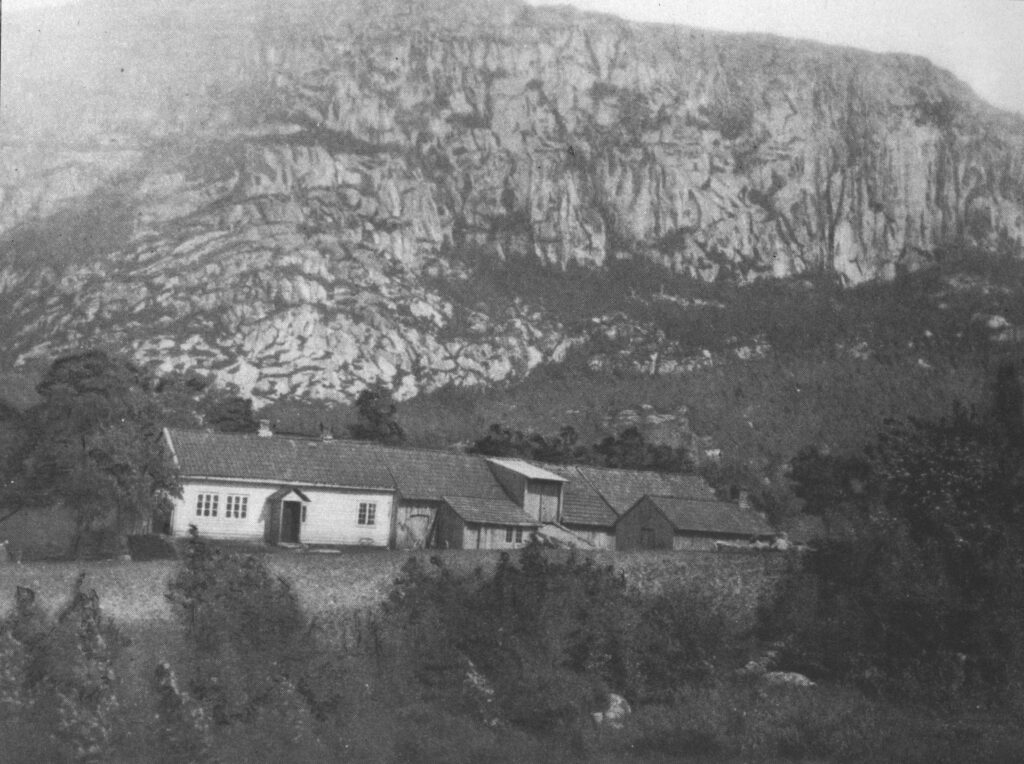
Jonas Øglænd was born on the Auglænd farm in the mountains of Høyland, the youngest of a large group of siblings.
1860
Sandnes will be a charging station with a population of around 500. In Høyland there are around 2000 inhabitants.
1860
After his confirmation, Jonas comes to Sandnes to work in his brother Sven's bakery. After a short time, he joins his brother Thore's grocery store. He stays there for several years.
1864
Jonas enjoys the life of a merchant and therefore spends a couple of years as an apprentice to merchant Henrik Svensen in Stavanger.
1866
The ferry «Oscar»I starts operating between Sandnes and Stavanger.
1866
When he returns to Sandnes, Jonas is still too young to take out commercial citizenship. The solution is to open a business in his sister's name
1868
The road from Gjesdal down Austråttbakken to Krossen is started.
1868
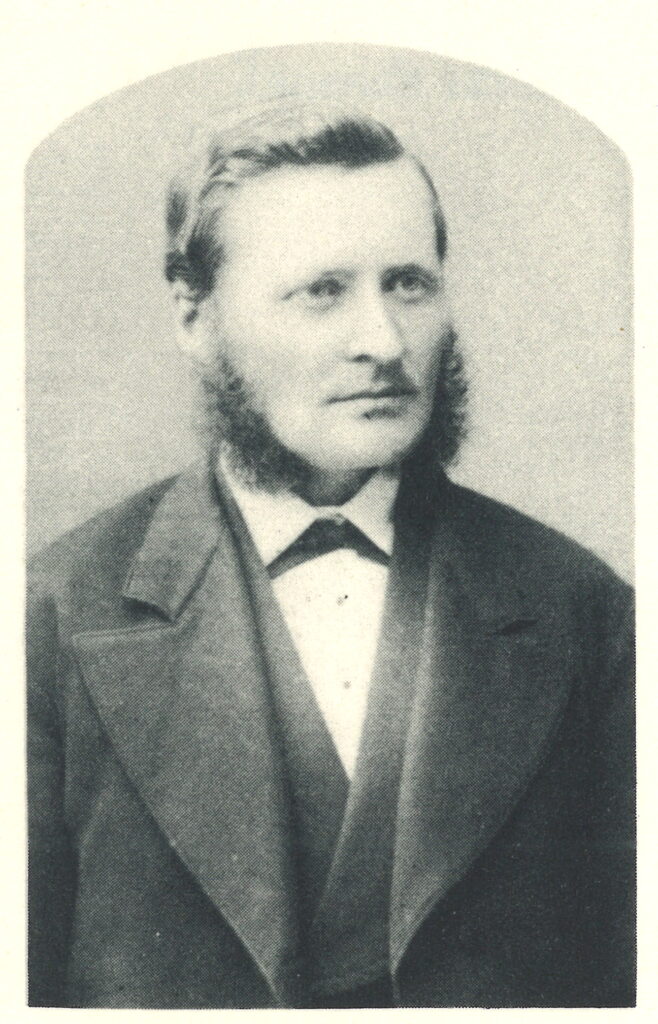
At the age of 21, Jonas Øglænd obtains commercial citizenship and registers a company in his own name.
1872
Telegraph station at Sandnes.
1872
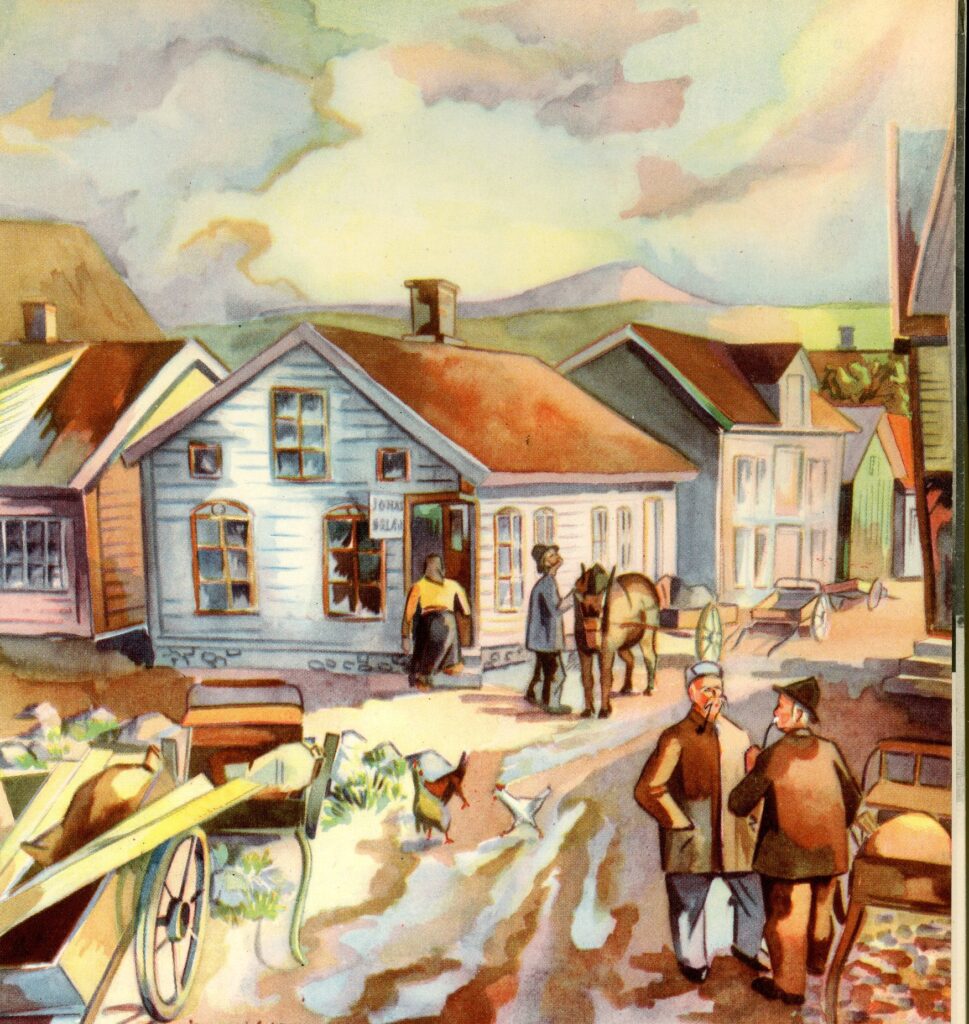
Øglænd buys a plot of land in Krossen. The following year, a one-and-a-half storey house with a warehouse is completed and Jonas opens a stall under his own roof.
1875
1875
1878
1892
1897
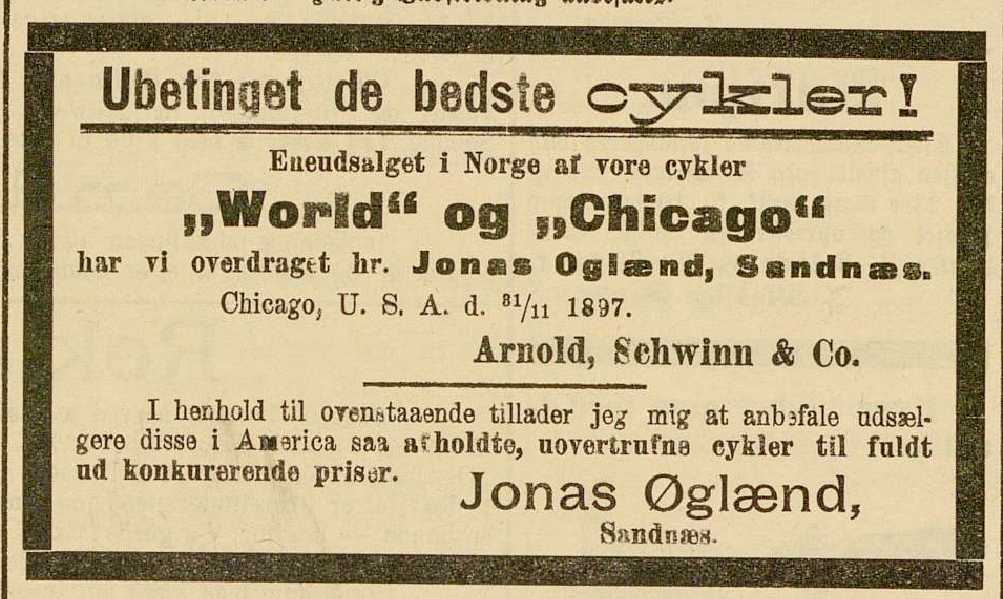 In November, Øglænd enters into a contract with A. Schwinn & Co for the agency of «The World» bicycles.
1898
1899
1899
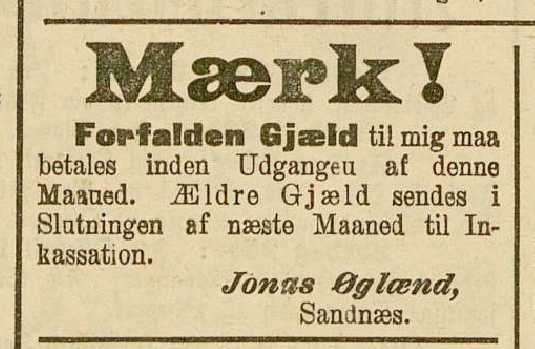
1900
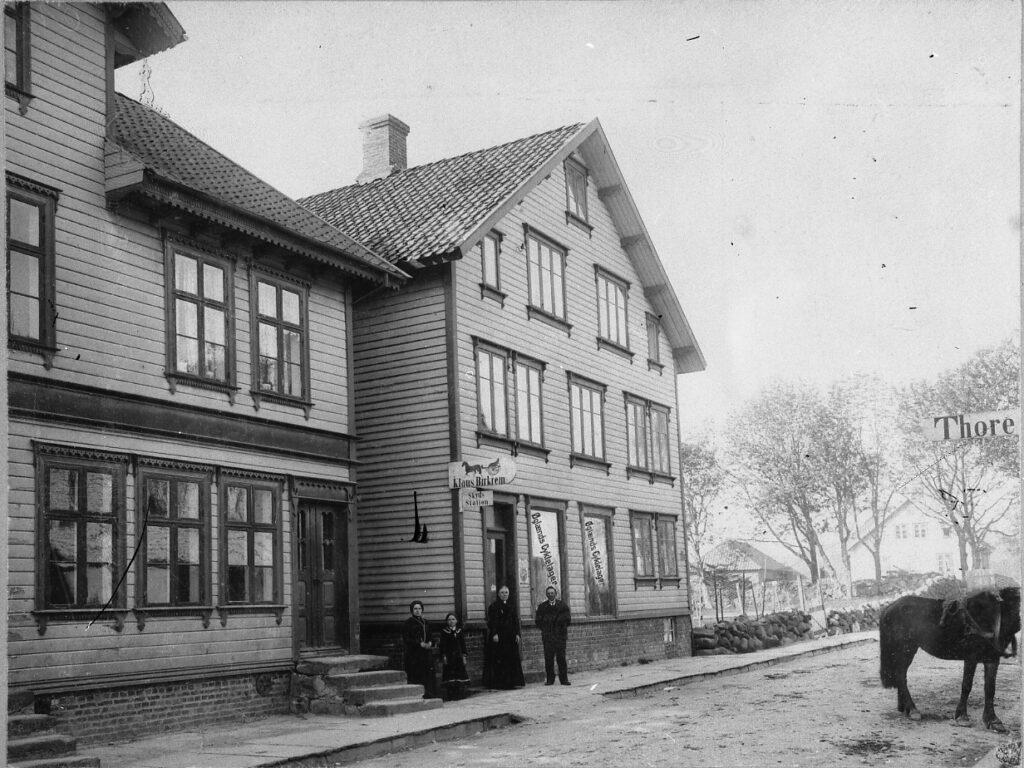
1901
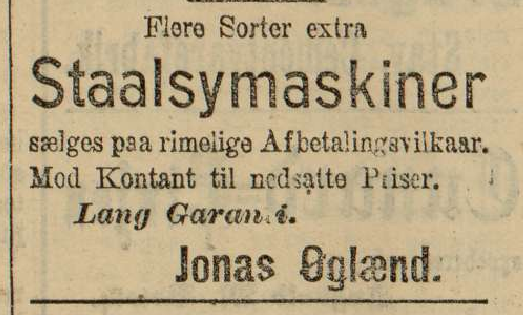
1902
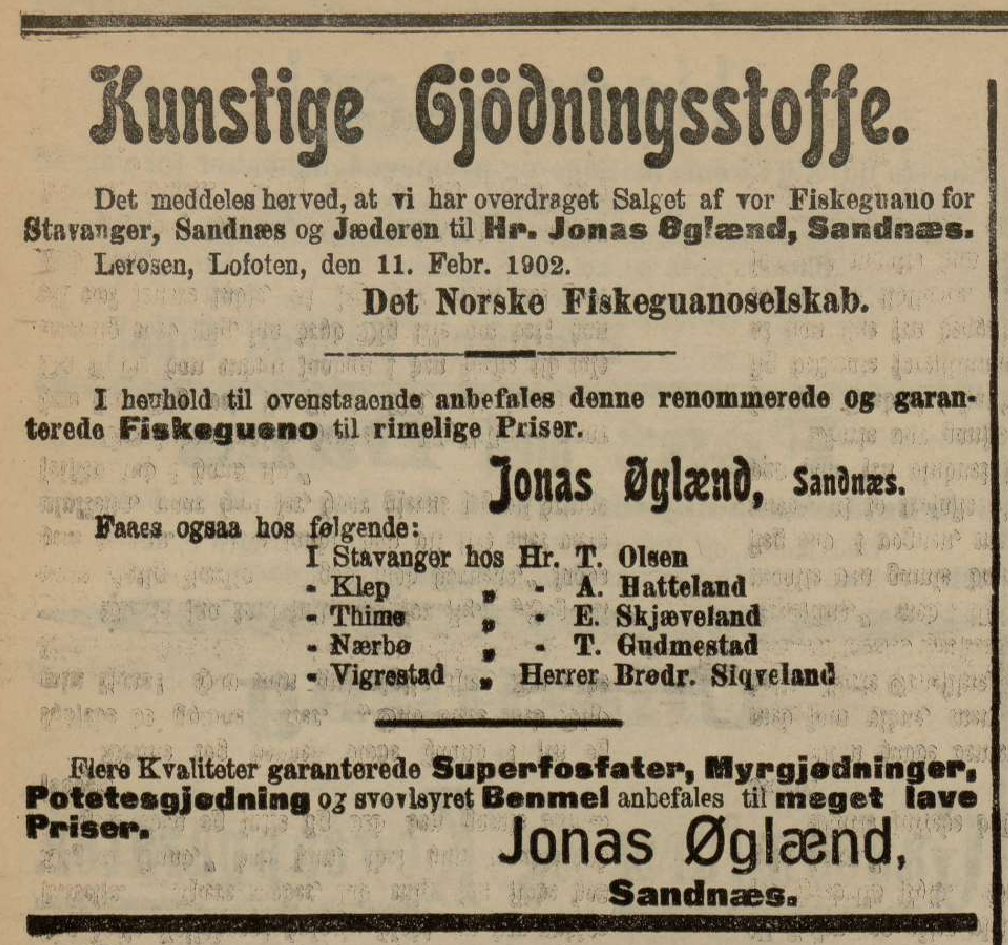
From the outset, the stall sold fertilizer and concentrated feed. Øglænd is said to have been the first in the district to start using artificial fertilizer.
1903
Jonas Øglænd becomes sole distributor in Norway for Fichtel & Sachs Torpedo frinav.
The company builds its first sea house.
1905
The dissolution of the union. The referendum in Sandnes is moved to Elim.
Norsk Hydroelektrisk Kvælstofaktieselskap (Norsk Hydro)
1905
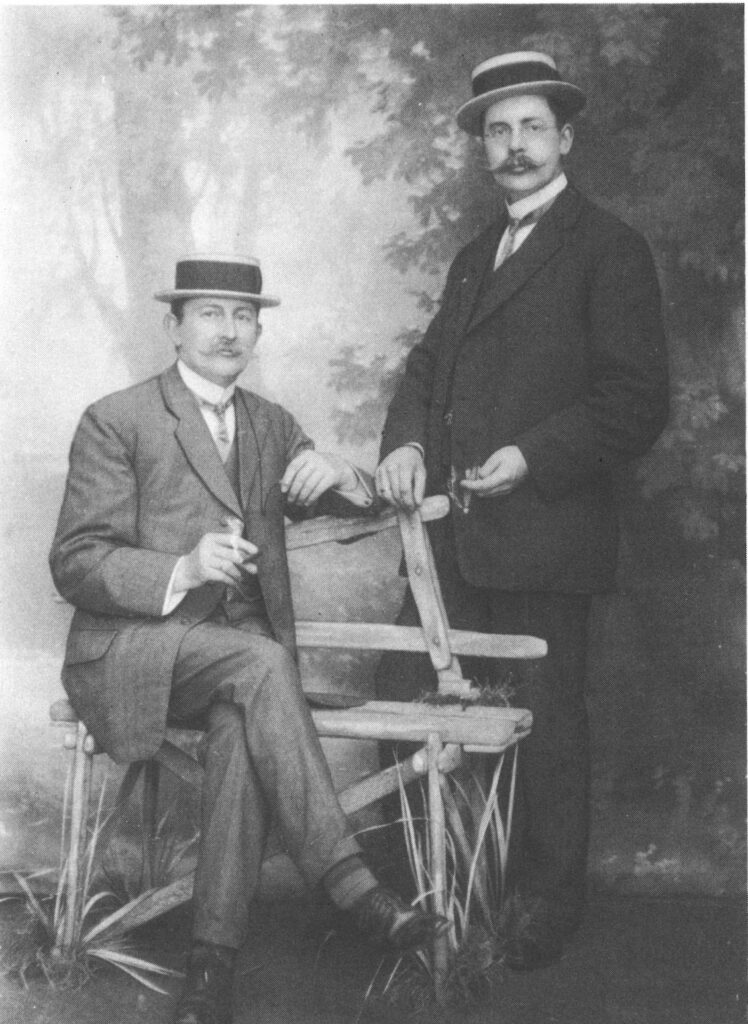
Lars and Jakob travel to the world exhibition in Liege to learn about bicycle production. They also visit Antwerp, Hamburg, Cologne and Paris.
1906
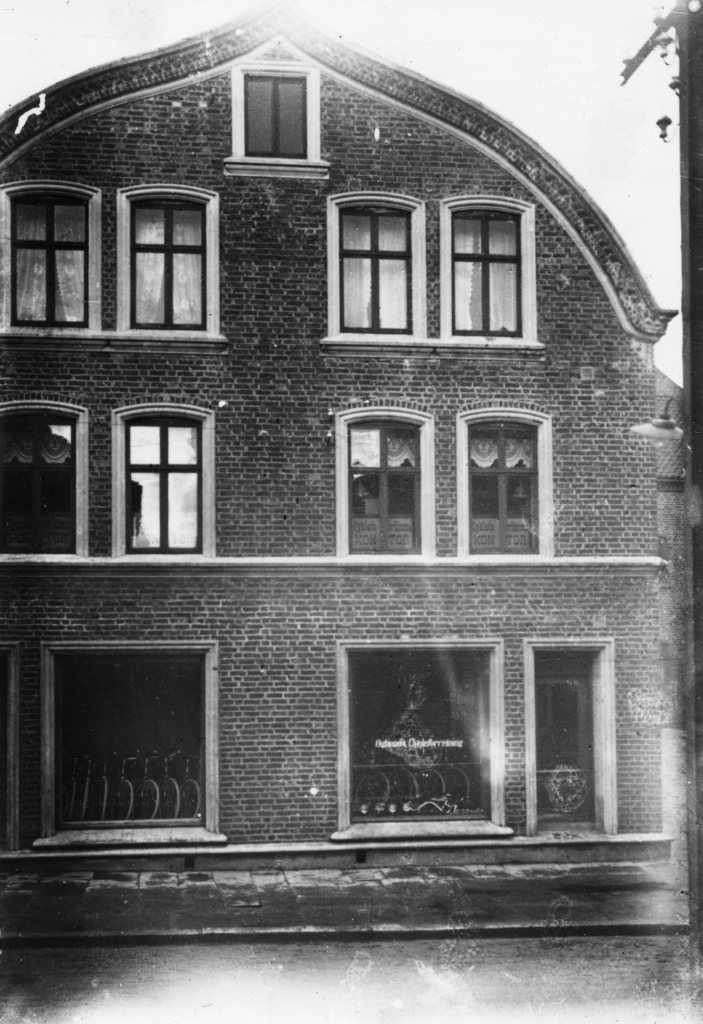
Lars and Jakob travel to the world exhibition in Liege to learn about bicycle production. They also visit Antwerp, Hamburg, Cologne and Paris.
1908
Two workers' associations are founded in Sandnes.
1909
Trial operation from Sviland power station with electricity to Sandnes where it goes to the bicycle factory and to Lars Øglænd's private home.
1911
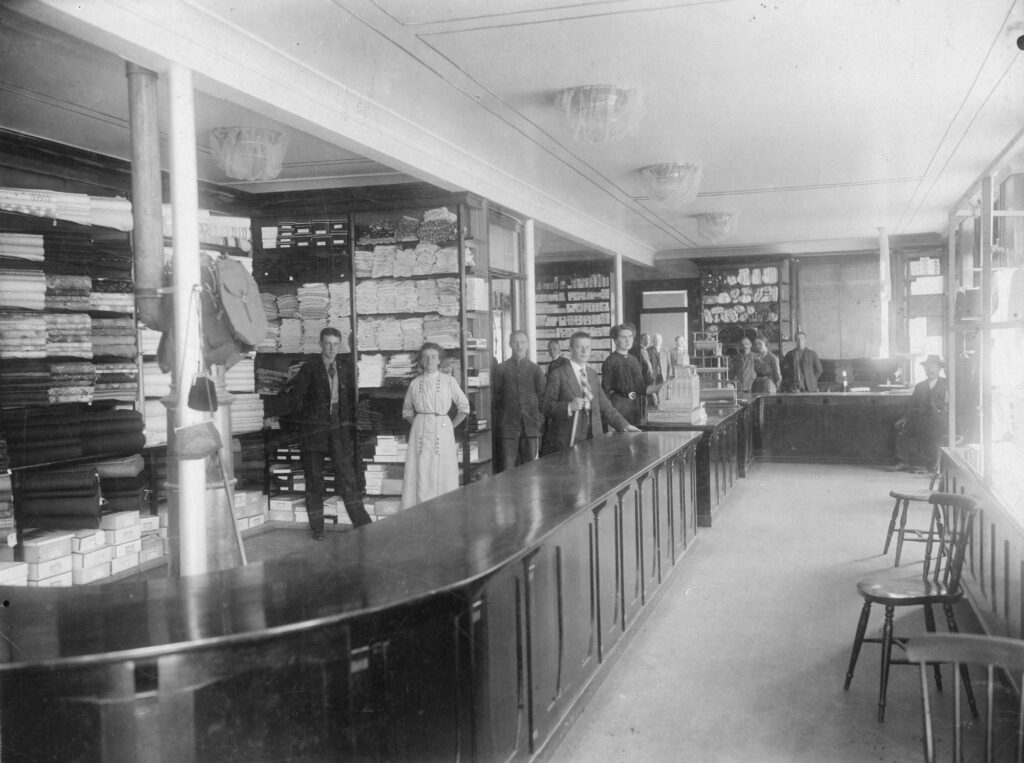
Separate manufactory department after rebuilding the stall in Krossen.
1913
Voting rights for women.
Sandnes jern og metallarbeiderforning is newly founded.
1913
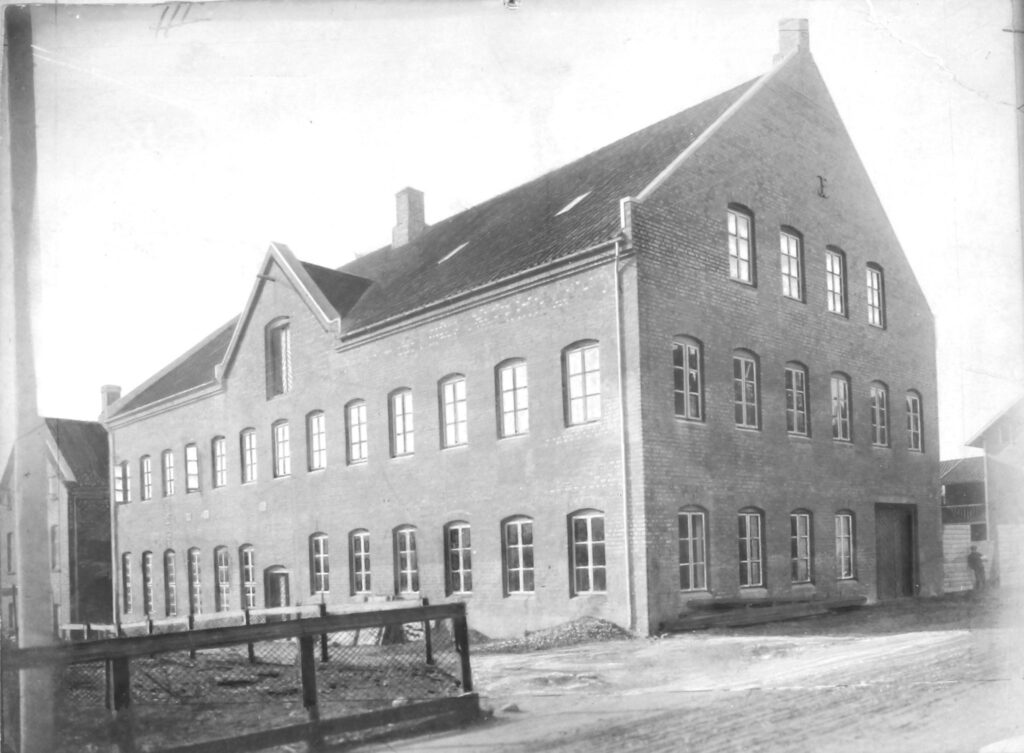
Some of the workers at the bicycle factory join the Sandnes Casual Workers' Union.
1914
Outbreak of the First World War.
1914
Some of the bicycle workers form their own section of the casual workers' association.
Workers at the bicycle factory are on strike for three weeks without results.
1915
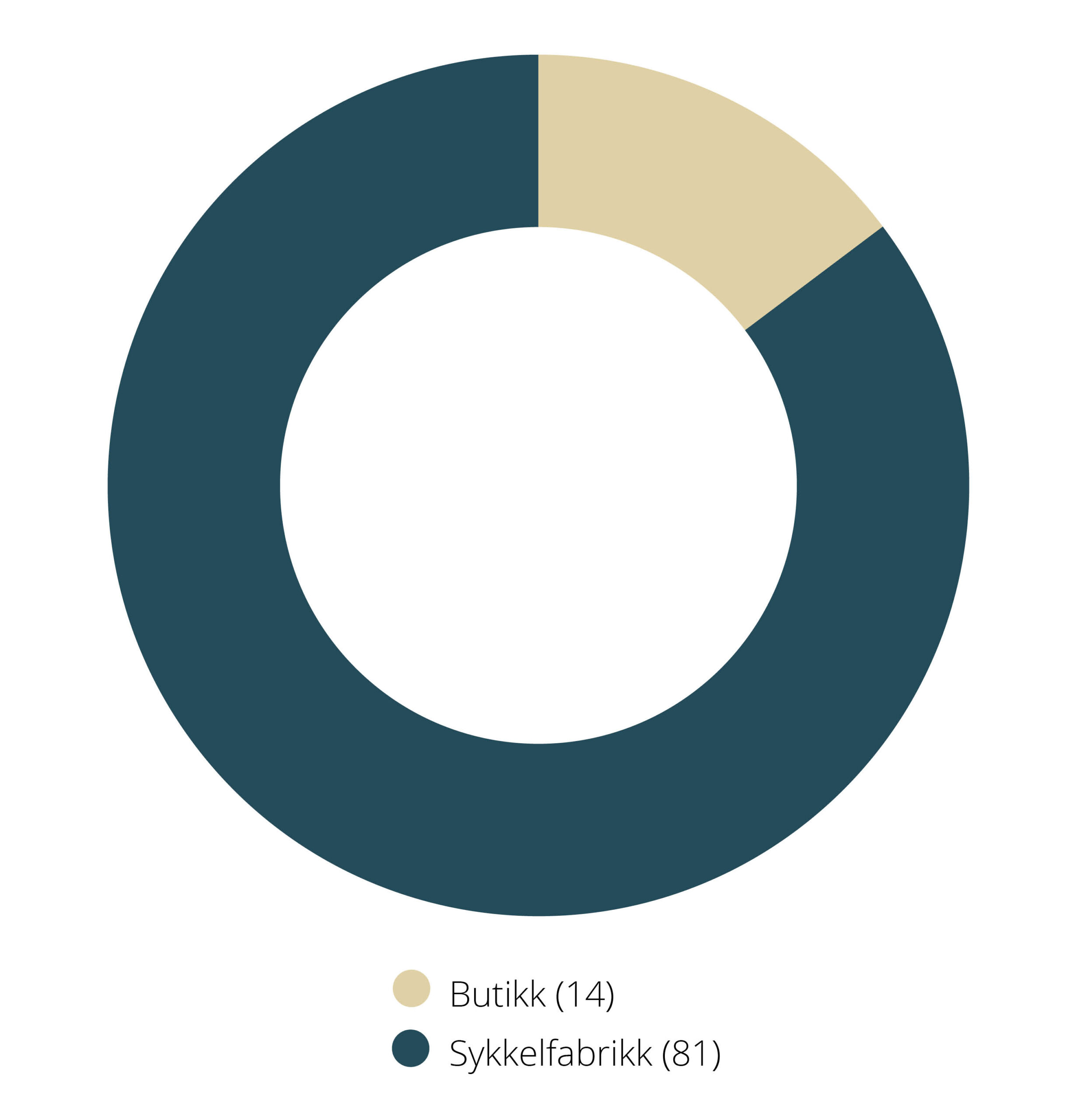
The number of employees in Jonas Øglænd is 95.
1916
The company secured the bicycle factory 60 tons of bicycle material from Germany.
1917
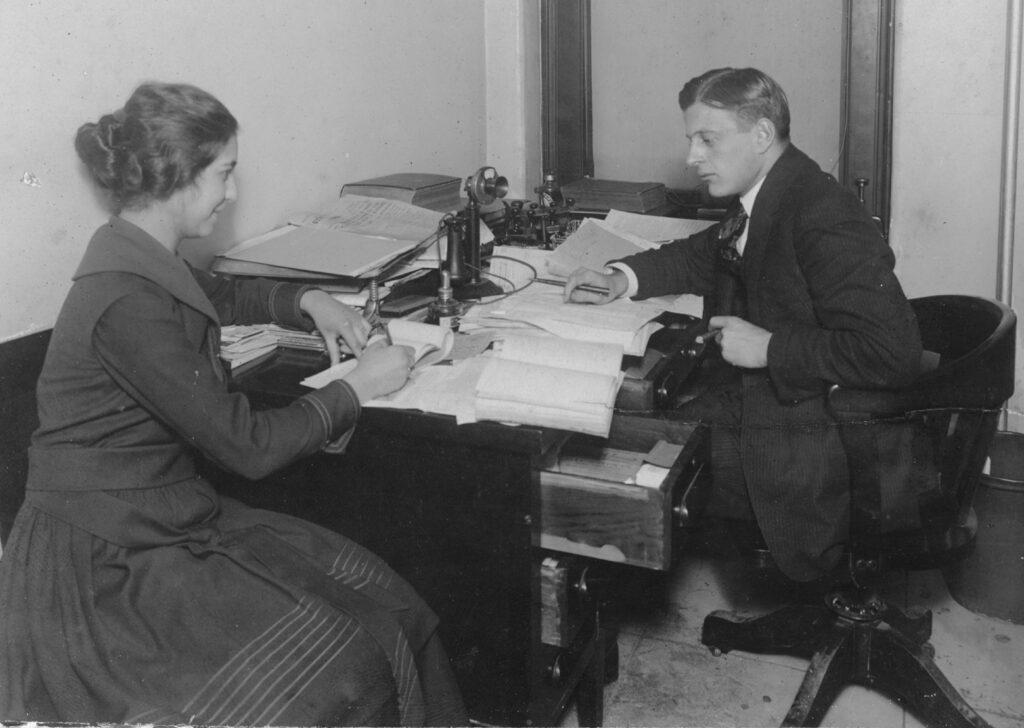
Jonas Bjarne Øglænd opens a purchasing office in New York.
Stavanger Aftenblad reports that the company Jonas Øglænd with ”Drammensfjord” has received several automobiles directly from America. More cars and a batch of larger motorcycles are on their way.
1918
The company is 50 years old. In connection with the anniversary, a relief fund is set up to support employees during illness.
1919
The 8-hour day with a 48-hour week is enshrined in law.
1919
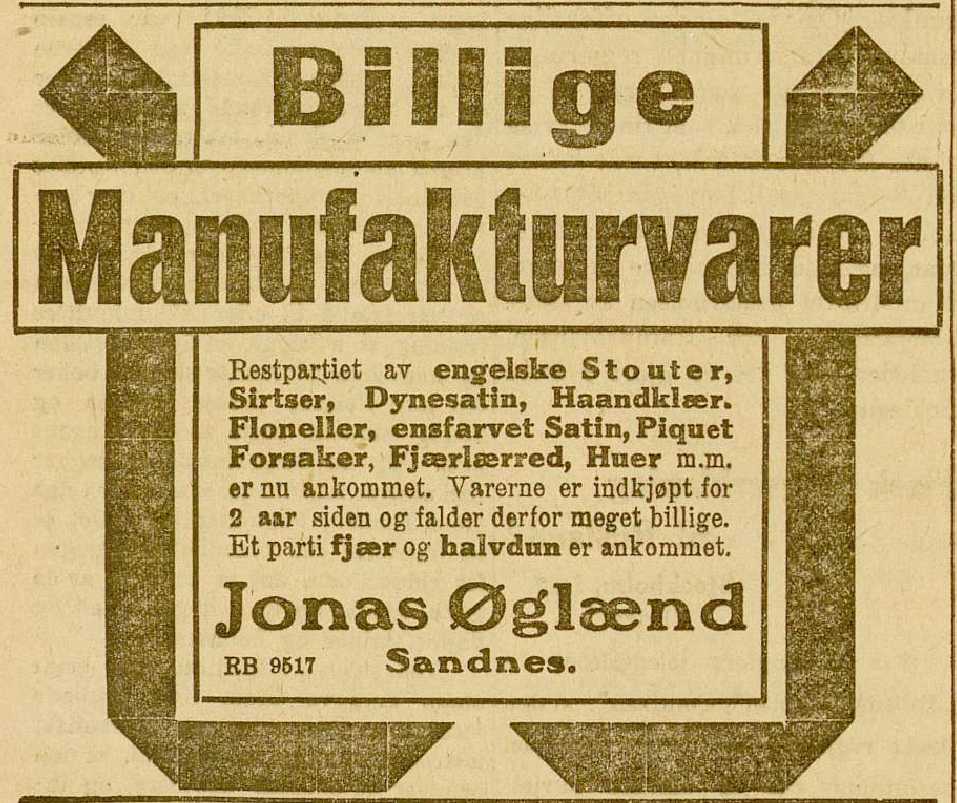
1920
There are 2803 inhabitants in Sandnes and 7006 inhabitants in Høyland.
1921
Major strike involving 120,000 organized workers in Norway.
1921
Organized workers at the bicycle factory participate in the strike. 13 workers lose their jobs as a result of the strike and the union is crushed.
1922
Sigurd J. Øglænd joins the company and starts a wholesale department trading in manufactured goods, concentrated feed and fertilizers. Traveling representatives and agents incorporate one district after another.
1923
First radio broadcast in Norway.
1924
Ålgårdbanen is opened.
1925
Langgata will be paved.
1925
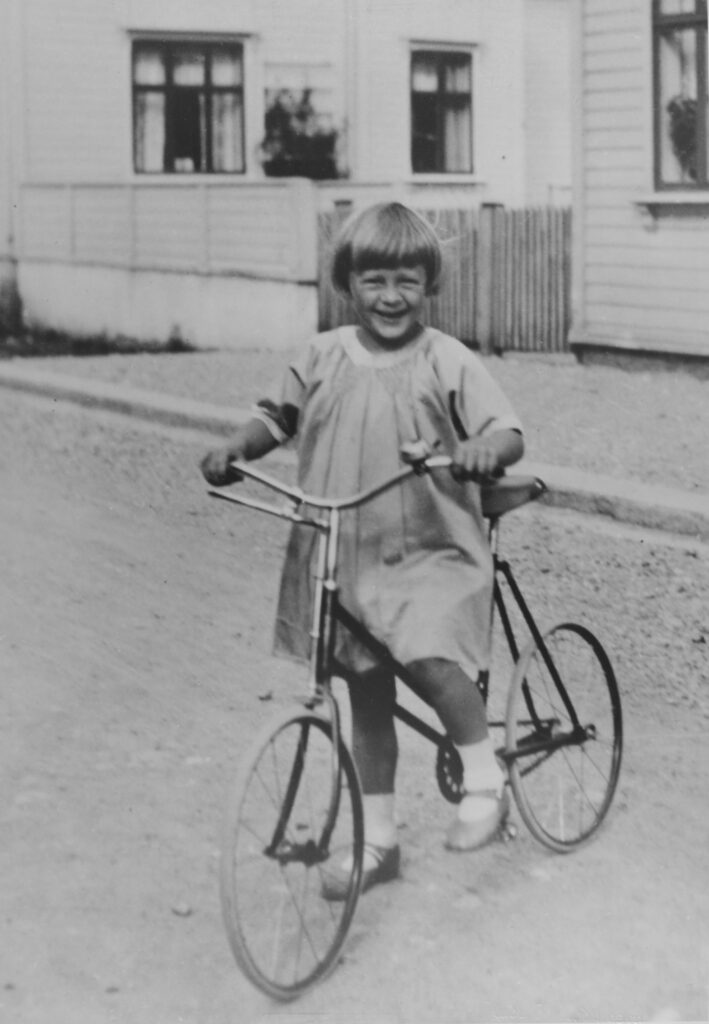
«The »Junior" two-wheeler is launched. Photo of Astrid Beate Øglænd Sandved on a prototype the year before.
1926
Øglænd establishes a clothing factory with 11 seamstresses and a manageress in 1926.
1928
Sverre Haga establishes a bus route between Sandnes and Stavanger.
1929
The crash on the New York Stock Exchange.
1929

1930
The crisis following the crash of the New York Stock Exchange hits Europe and Norway. Sandnes is relatively unaffected by the worst of the crisis.
1931
Høyland village museum is established. The population of Sandnes passes 3000. In Høyland there are just over 8,000.
1931
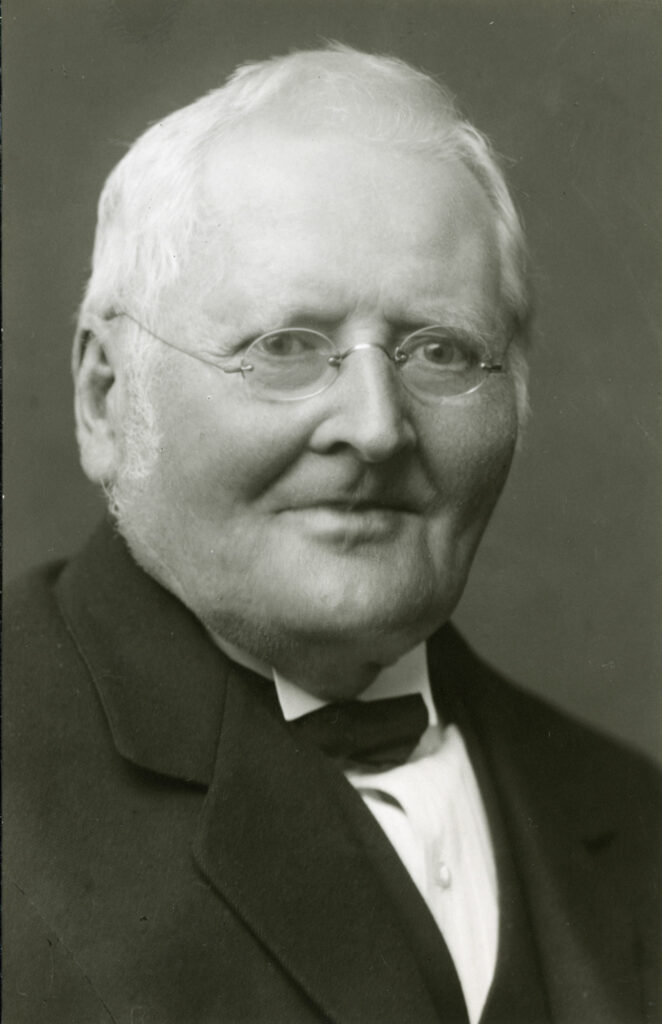
Jonas Øglænd changes with his children and Jakob and Lars Øglænd become sole owners of the company. Jonas Bjarne Øglænd returns from the USA and joins the bicycle factory. Per Sanne, Lars Øglænd's son-in-law, joins the manufacturing department. On October 10, Jonas Øglænd dies, almost 85 years old. The garment workers go on strike. The company becomes the sole distributor in Norway for Sachsmotor.
1933
Naming competition that gives the bike name DBS - Den Beste Sykkel.
1935
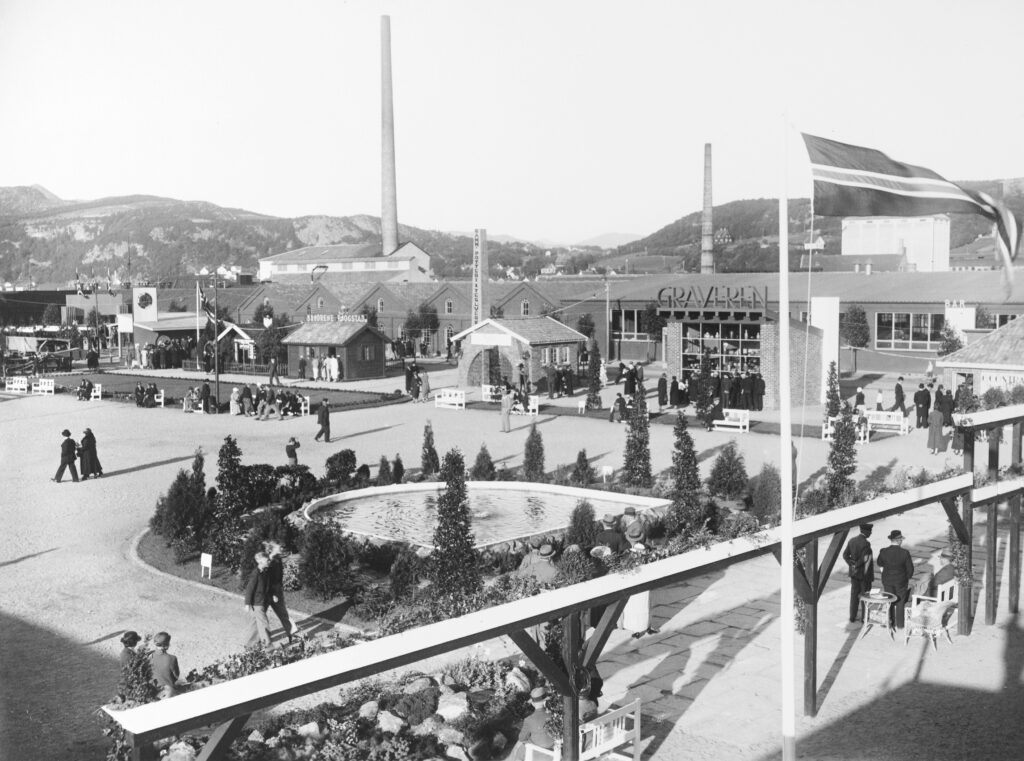
The city of Sandnes is 75 years old and is organizing an anniversary exhibition in what is now the Ruten area.
1935
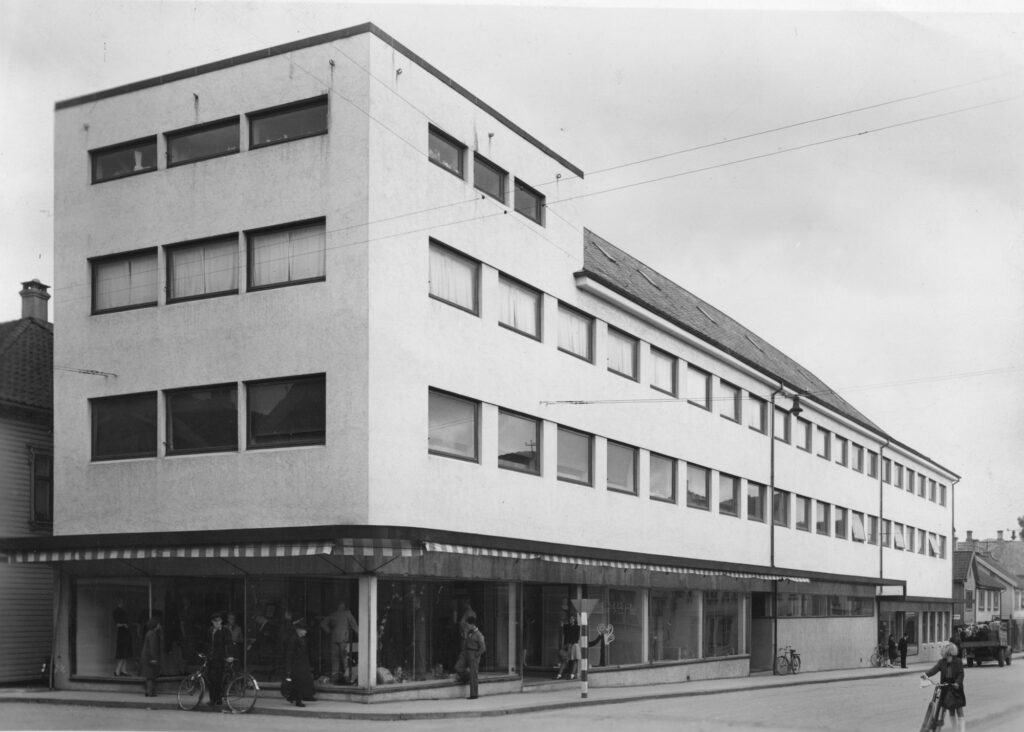
Kramboden in Krossen is converted into a modern commercial building. An in-house decorator is employed who is responsible for the window display.
1937
Sola airport opens.
1939
A new garment factory is built in 2 wings.
1940
Germany invades Norway and the country is at war.
1940
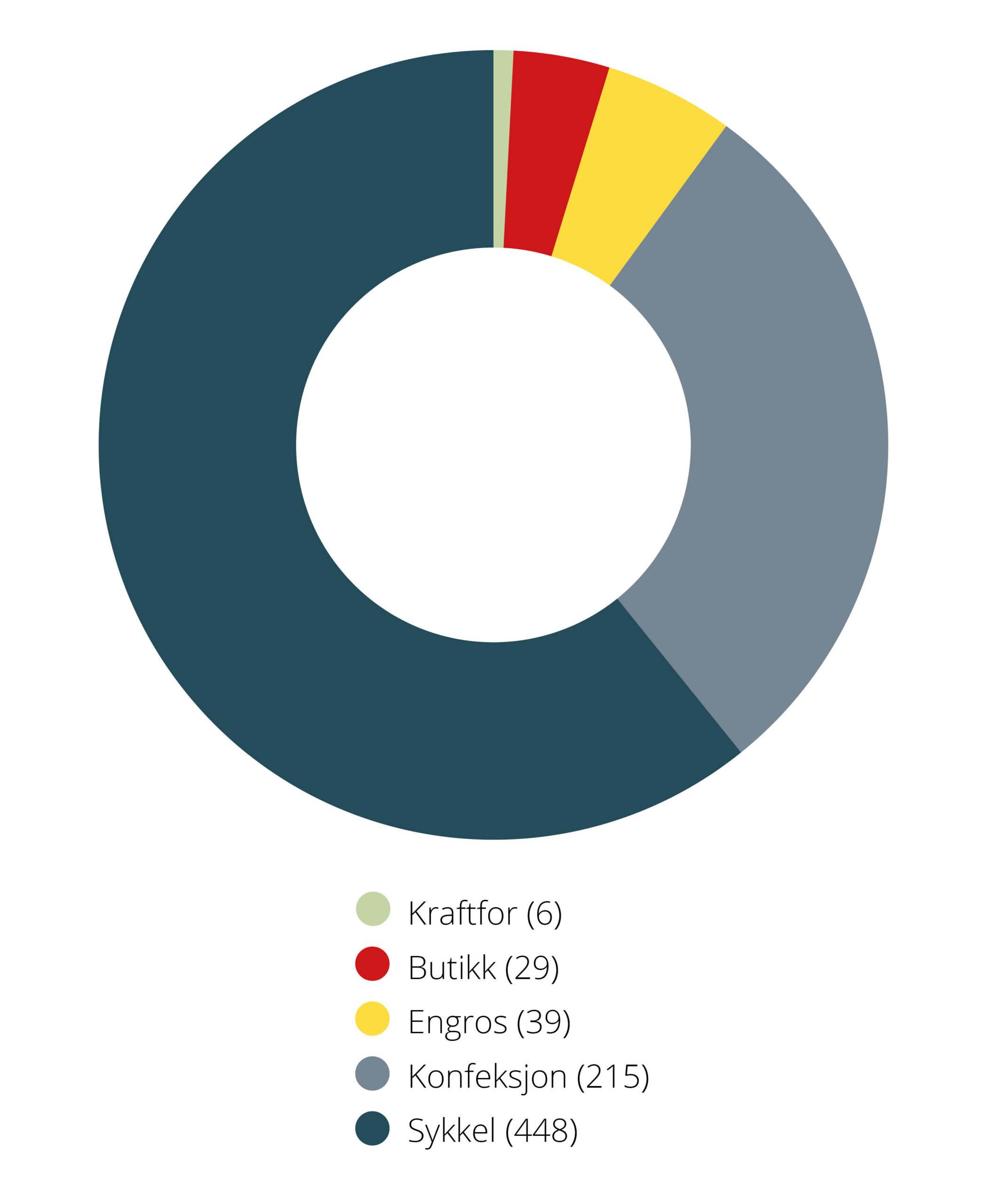
The number of employees in Jonas Øglænd is 758.
1942
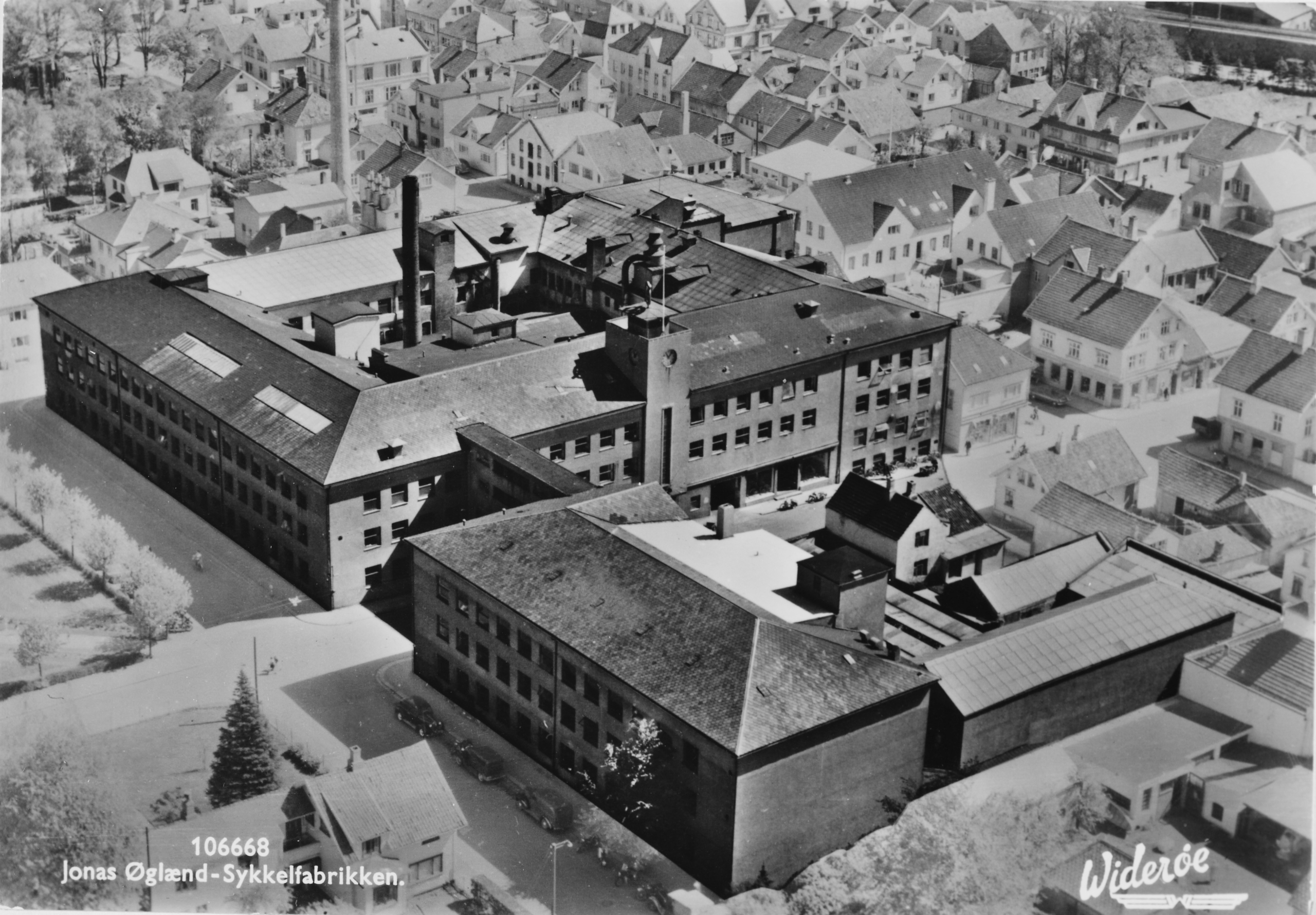
With the latest extension in Solveien, the bicycle factory covers almost two entire blocks in the city center. The pedestrian bridge between Solaveien 3 and 10 is decorated by Ståle Kyllingstad.
1943
The company is celebrating its 75th anniversary.
1945
Peace in Norway.
The Norwegian Export Council is established.
1945
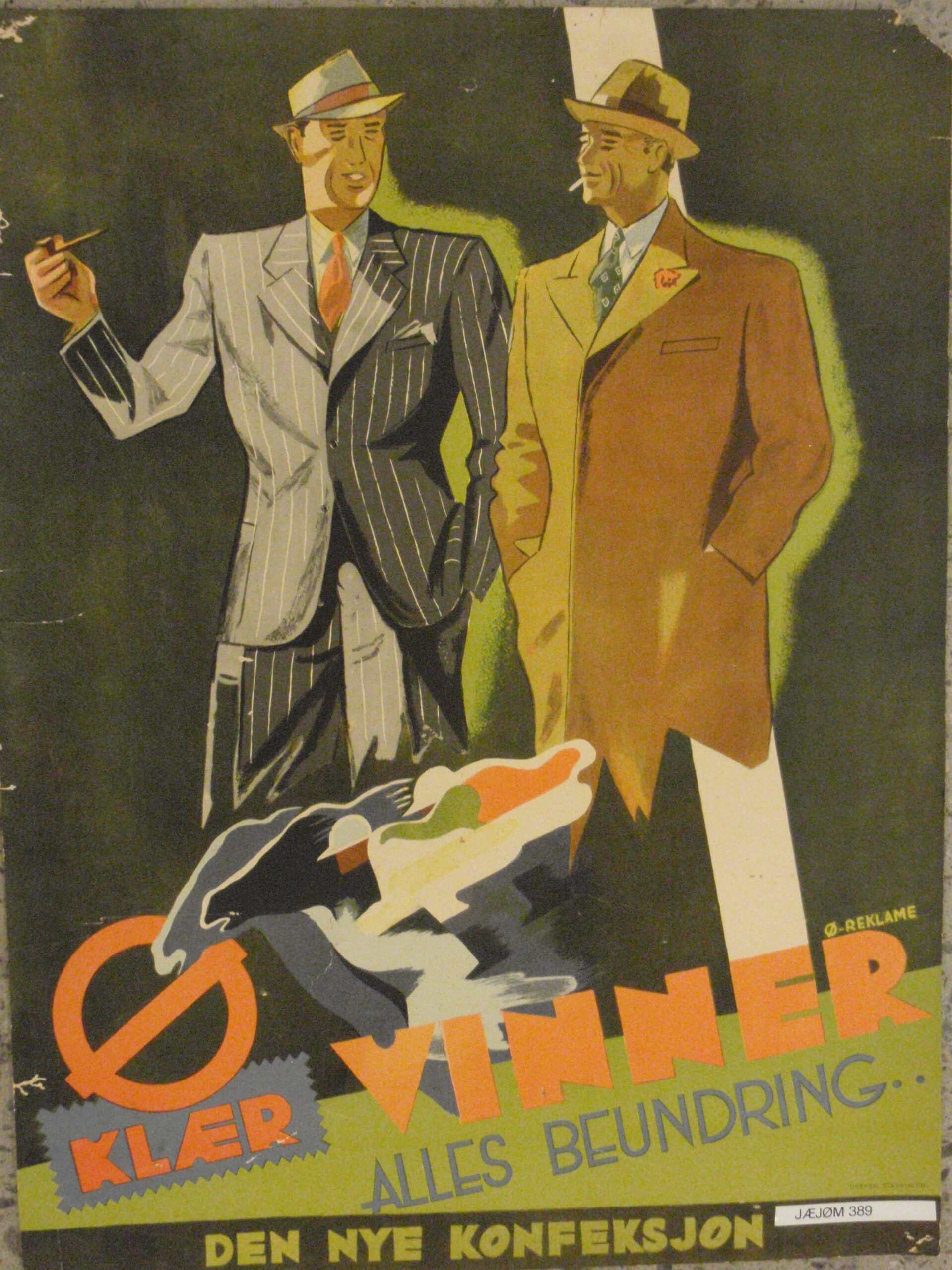
«Den Nye Konfeksjon Ø-klær» is launched with self-made suits.
1946
The population of Sandnes city is 4184. In Høyland there are 9654 inhabitants.
1947
3 weeks of vacation becomes statutory.
1947
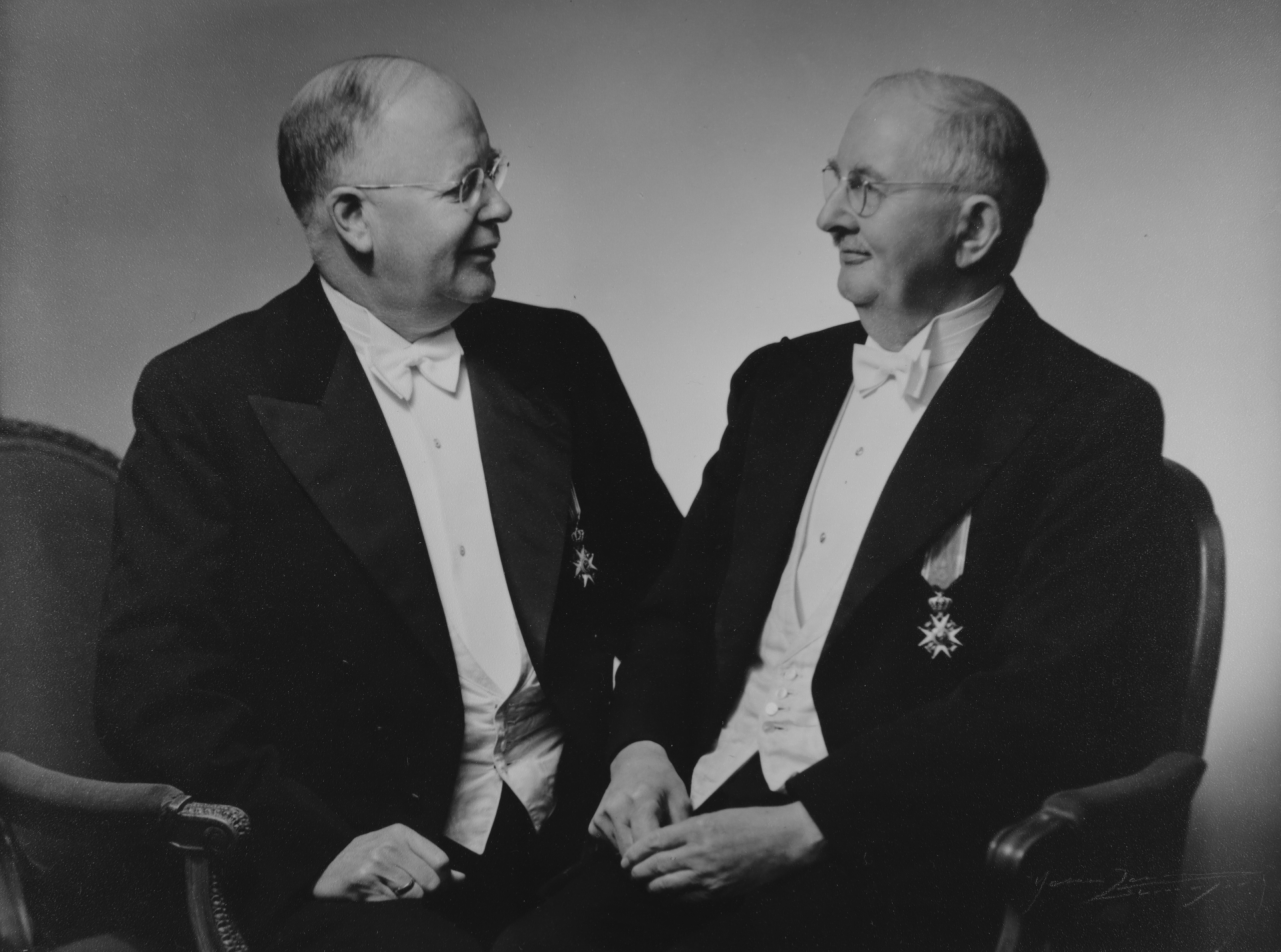
Jakob and Lars Øglænd become Knights 1st Class of the Order of St. Olav for their contribution to Norwegian business.
1948
The Norwegian Parliament decides to accept the Marshall Aid.
1948
A new company agreement is signed. Jonas Bjarne Øglænd, Sigurd J. Øglænd, Tor L. Øglænd and Per Sanne are elected as active shareholders and, together with Jakob and Lars Øglænd, form the legal board.
1949
Norway becomes a member of NATO.
1951
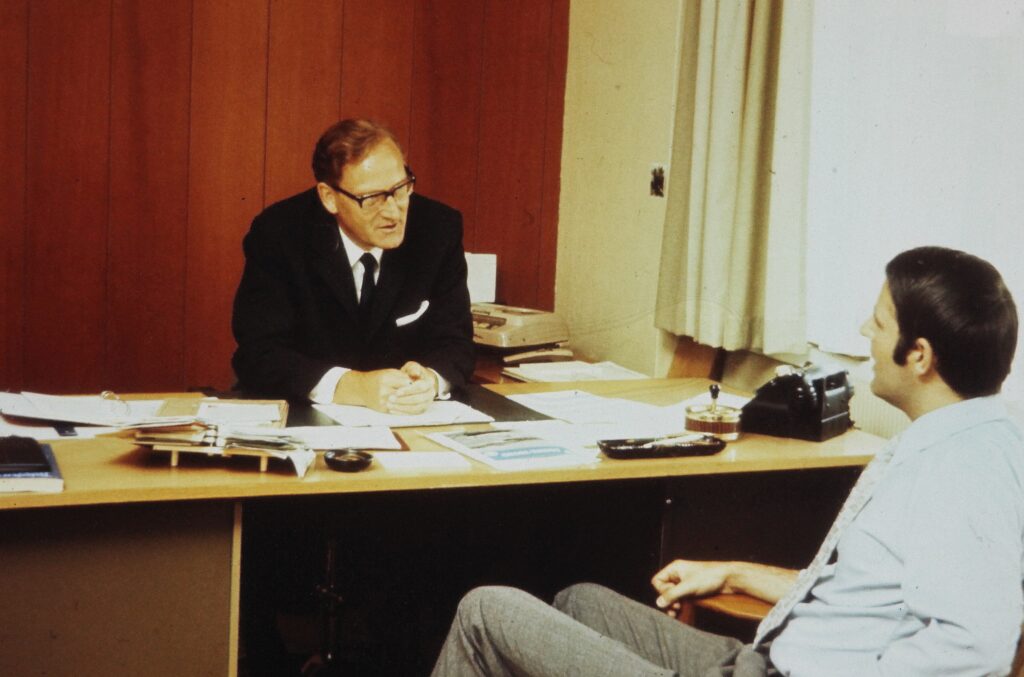
The company gets its own social curator, Reidar Skarung. After a few years, he becomes social manager.
1952
Rationing of meat, coffee and sugar is abolished.
1953
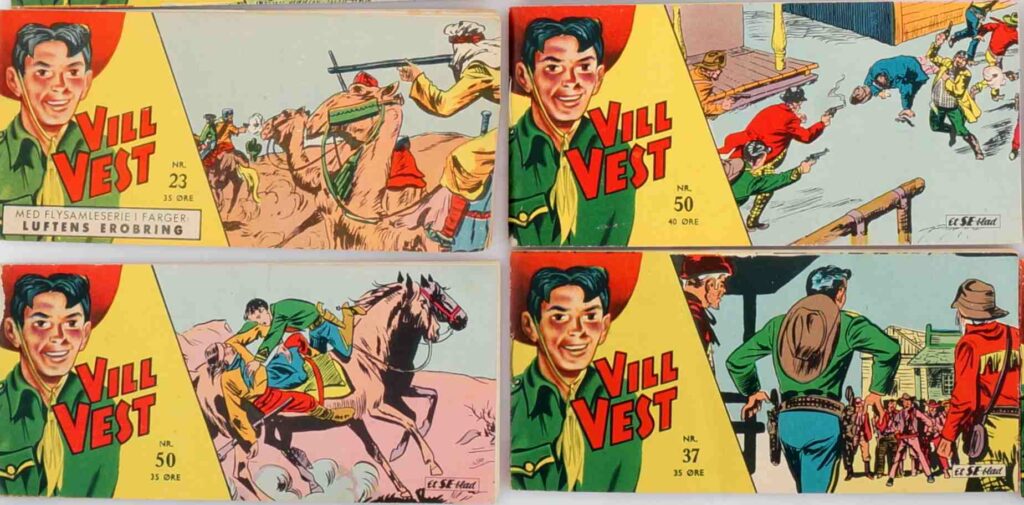
The comic Wild West is published and becomes very popular.
1955
The railway in Sandnes will be converted to an elevated line.
1955
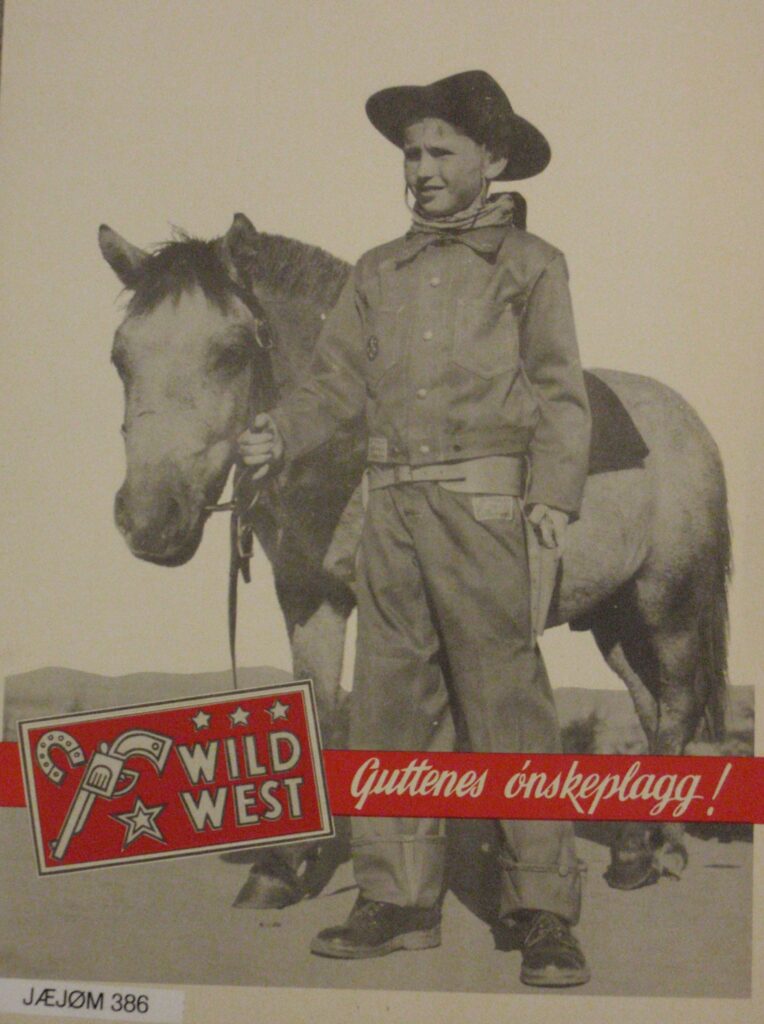
The company is launching the Wild West denim brand as «the boys» clothing of choice".
1956
Universal health insurance is introduced.
Elvis Presley dominates the charts and is helping to shape a youth culture of his own.
1956
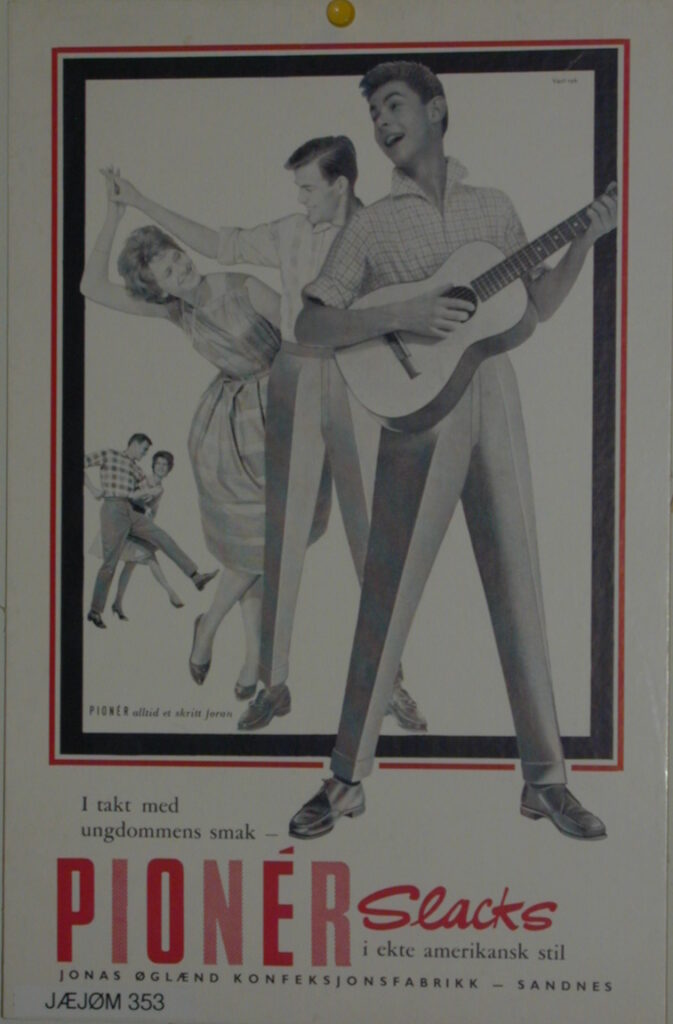
The company's advertising material begins to address the new youth culture.
1956
Informal meetings between the engineers at Øglænd, Polaris and Aducerket. Eventually develops into TESA (Technical cooperation group).
1957
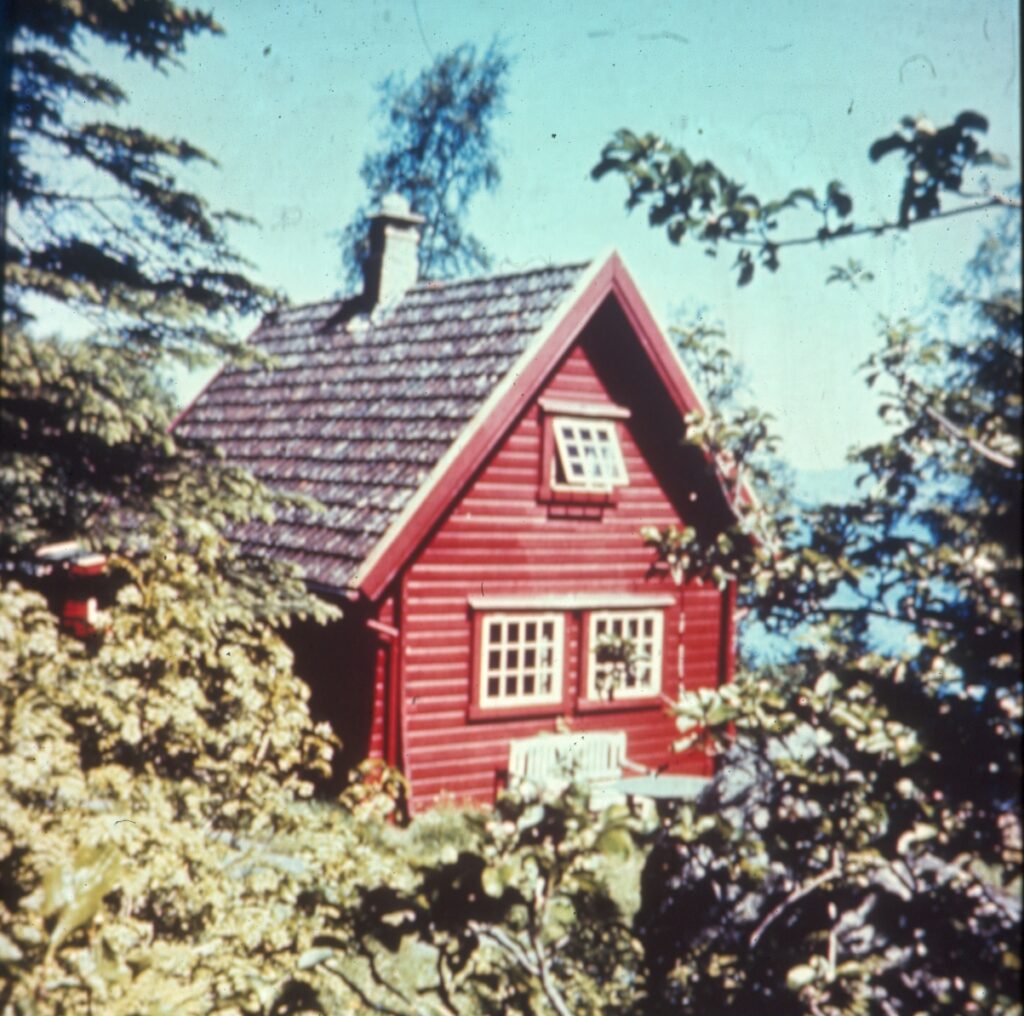
The holiday home at Bergsagel is ready.
1958
Our own equipment store will open in Langgata 6.
1960
The city of Sandnes celebrated its 100th anniversary. The first regular television broadcasts in Norway. Car rationing in Norway is abolished.
1960
The shopping center will have its own Junior department. The Manufaktur department gets its own Telex facility.
1961
A new clothing factory is being built at Vågen. Manufaktur-engros takes over the clothing factory's former premises.
1962
The textile bazaar opens in Langgata.
1963
The company is expanding in the Vågsgjerd area.
1966
Twiggy is changing fashion for young women.
1966
The company is converted into a limited company where the Øglænd family owns all the shares.
Konfeksjonsfabrikken establishes a satellite factory in Strand municipality.
The grocery store was modernized into a food center with an entrance facing Erling Skjalgsonsgate.
1967
National Insurance Act.
1967
1968
Norrønakonferansen was founded as Jonas Øgländ's anniversary gift to Sandnes Handels-, Håndverks- og Industriforening.
The TESA collaboration is formalized.
1968
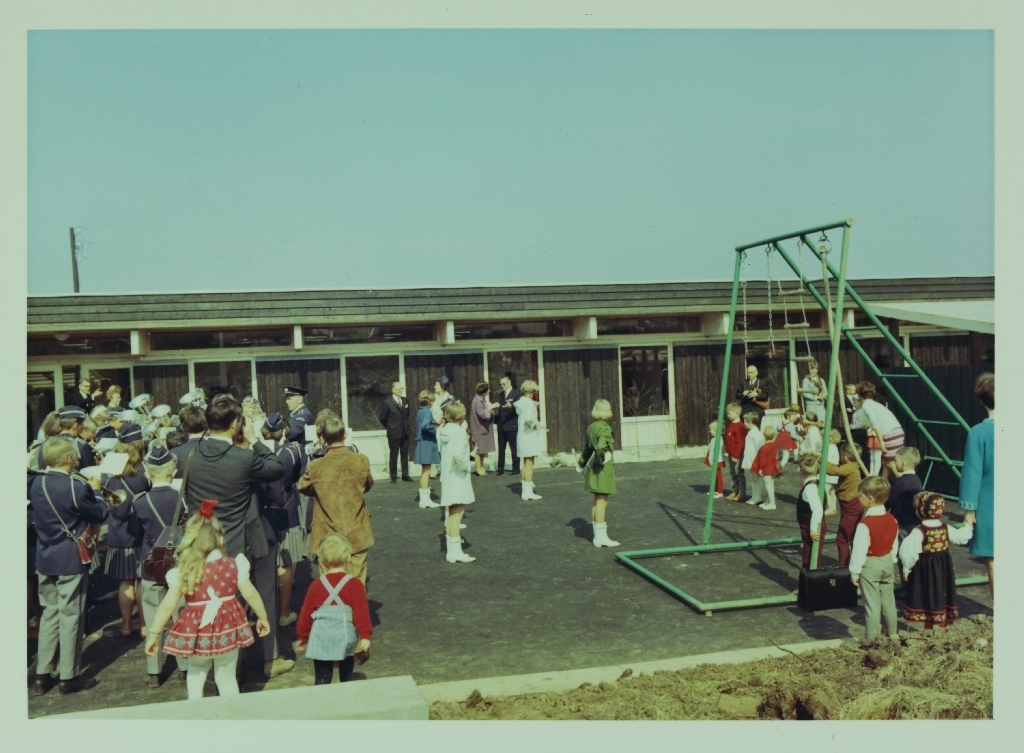
The Jonas Øglænd company celebrates its 100th anniversary. In connection with the anniversary, the Sandnes day care center, later Varatun kindergarten, was donated to the city.
1969
The first discoveries on the Ekofisk field.
1969
The company gets its own in-house print shop. Skjalgsonsgate.
1970
Act on value added tax.
1970
Øglænd develops the Bodyguard training equipment.
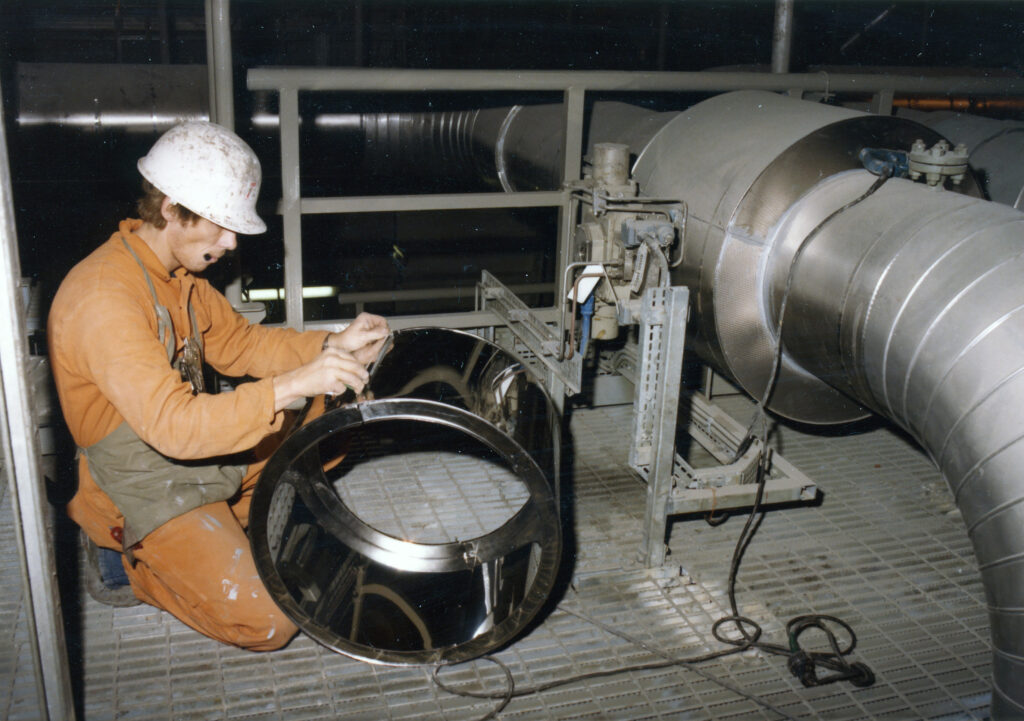
Starts producing orange coveralls as a protective measure in the industry.
1971
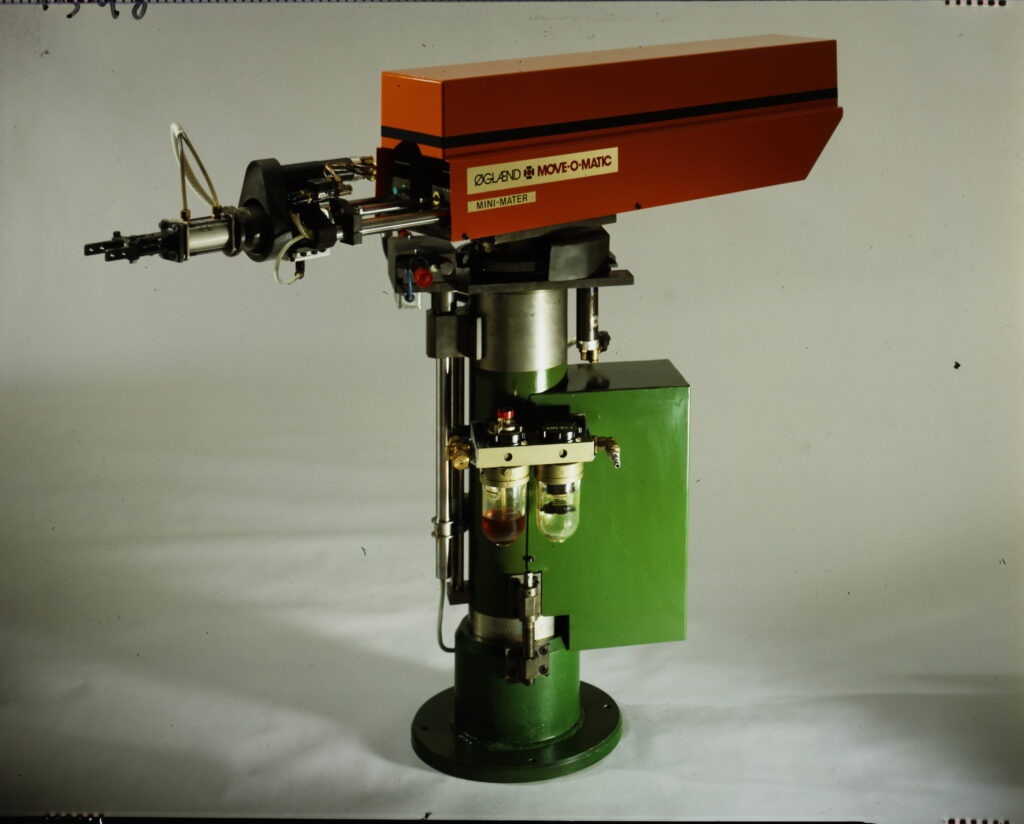
Move-o-matic, a handling robot for industry.
Launches the Pioner brand on workwear.
New automatic pre-mixing plant at Vågen in collaboration with Krossens Havremølle.
1973
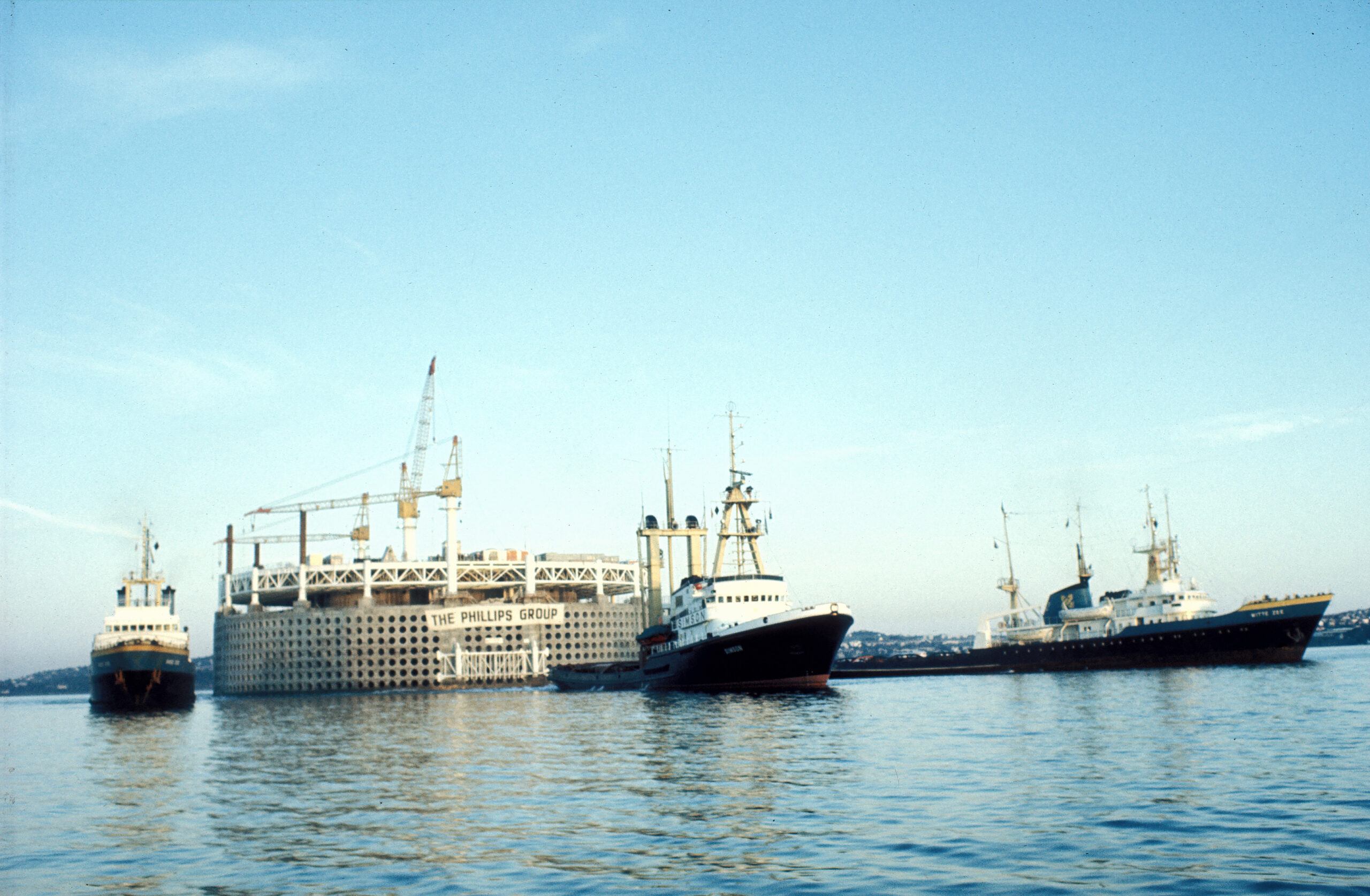
The Ekofisk tank is towed out from Stavanger where the workers are wearing Pioneer workwear.
1973
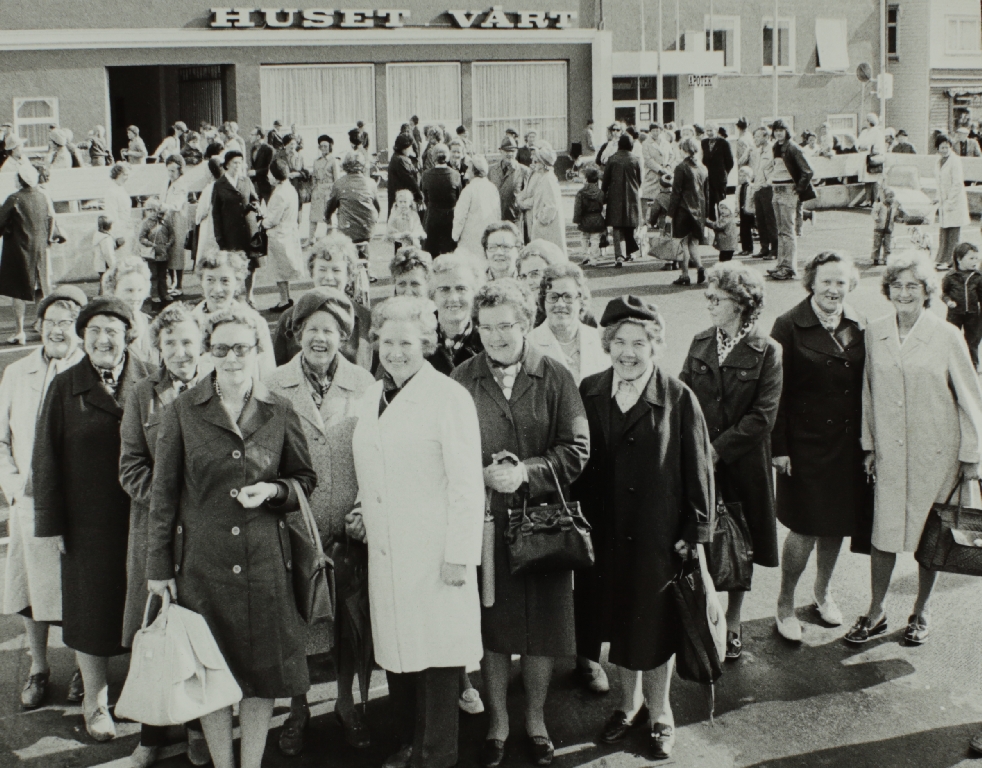
The old bicycle factory will be rebuilt and open as the «HUSET VÅRT» shopping center.
Major fire at the bicycle factory in Kvål.
1974
Creates a separate system department with data facilities.
Sandnes Jernvarefabrikk merged into the company.
Ø - Engineering with department for cable cars.
1975
The growing oil activity in the North Sea creates a growing market for workwear for Øglænd.
1975
Islands go public.
1977
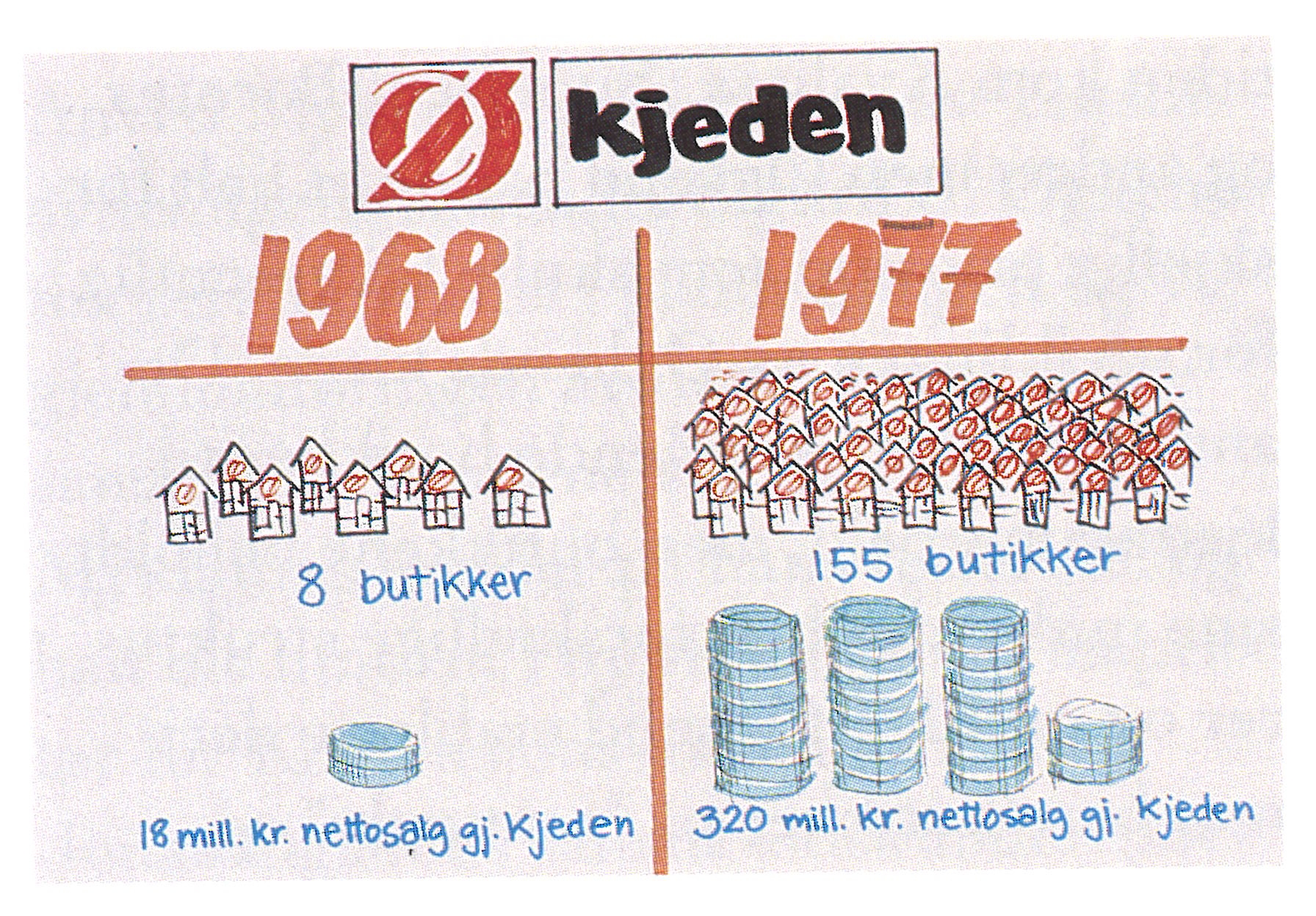
The island chains grew in Rogaland and Trøndelag.
The island chain had the store types;
- Finance center
- Island peonies
- Island carpets (Island environment)
1977
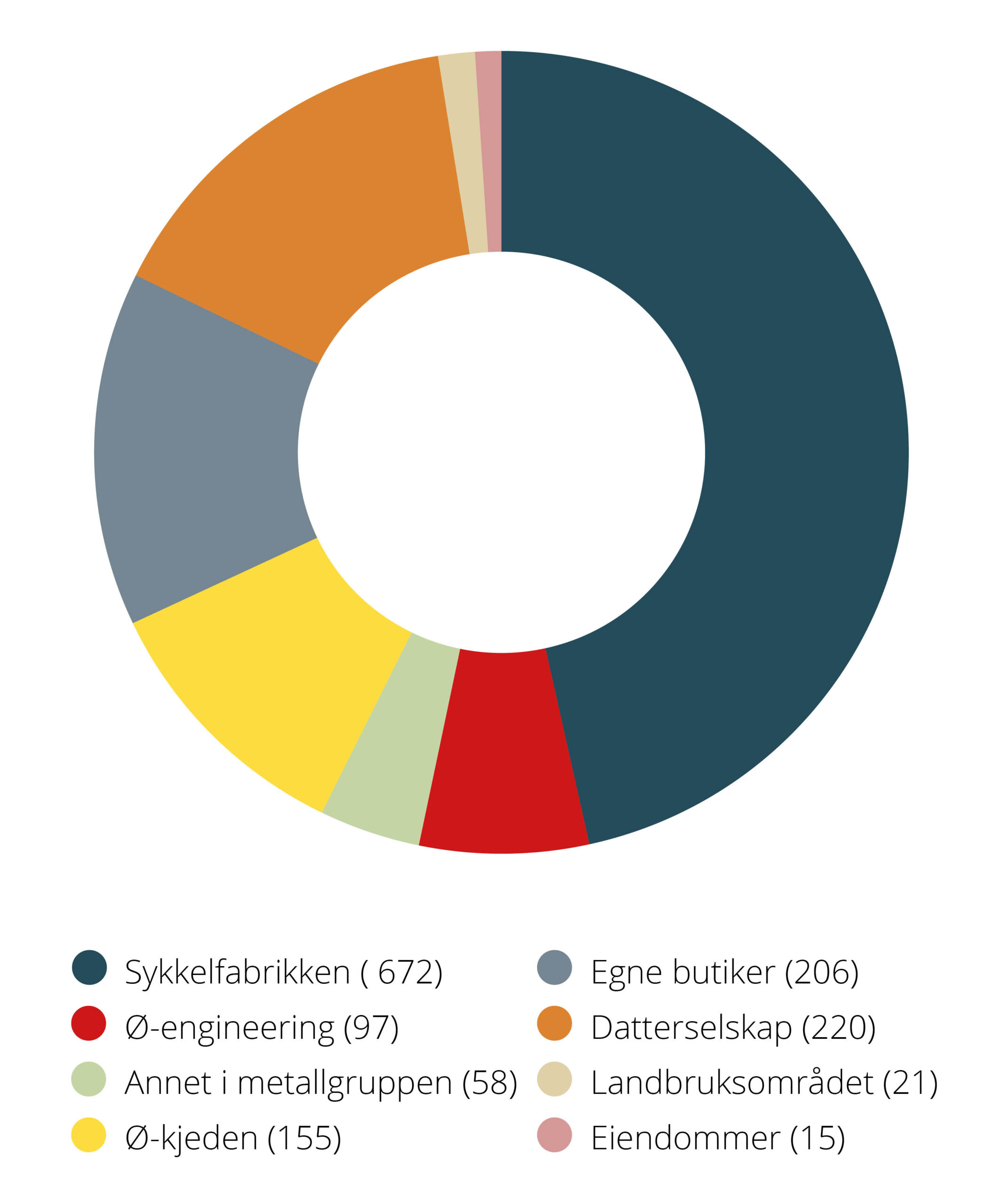
The number of employees in Jonas Øglænd AS is 1977.
1977
Building a grain silo at Vågen with space for 12,000 tons of grain.
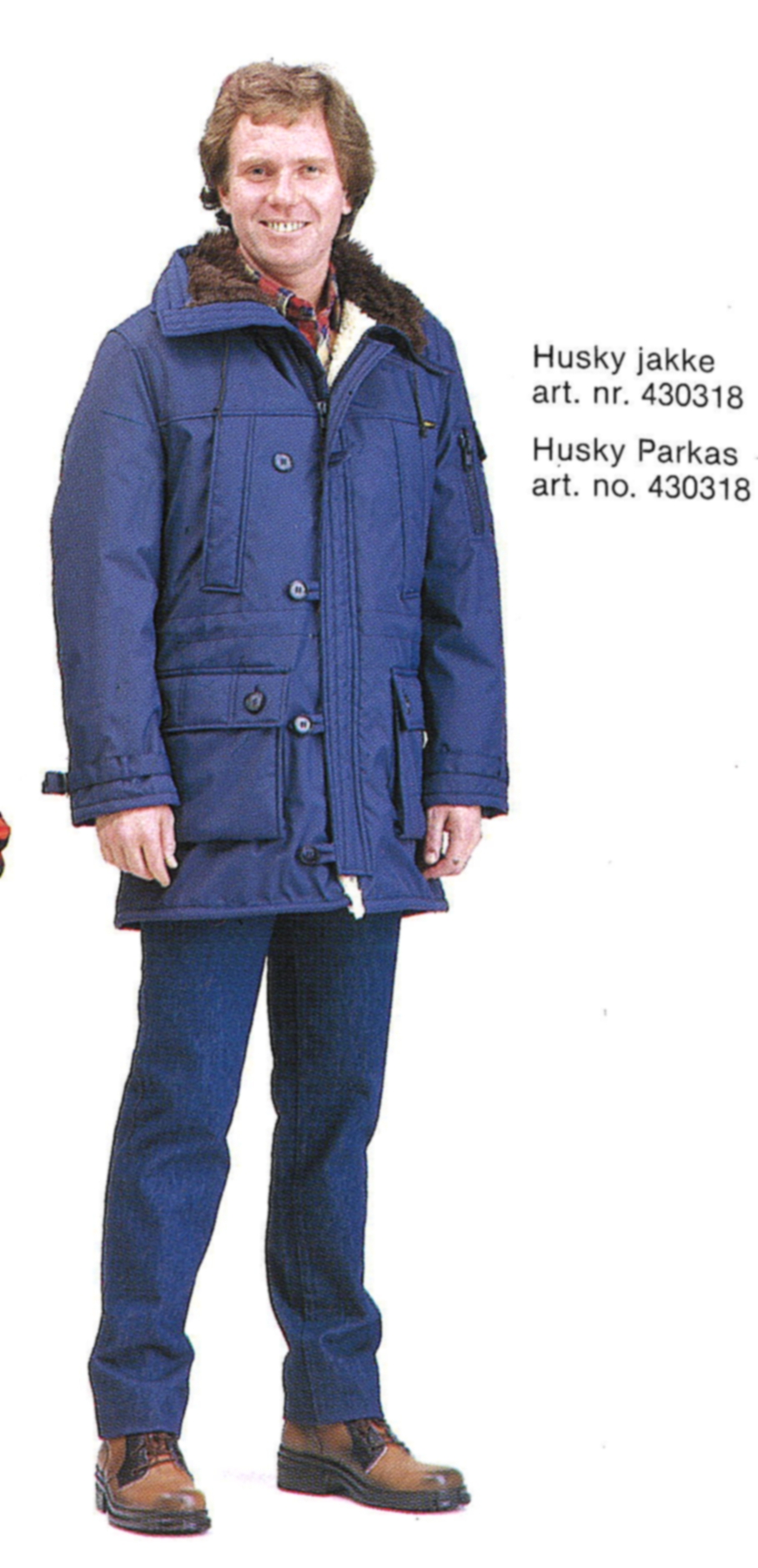
Launching the «Husky» jacket, often referred to as the «North Sea jacket», at the oil exhibition in Aberdeen.
The number of employees in Jonas Øglænd AS is 1702.
1979
1979
The stores in the island chain and the franchise chain will have a new name and a new profile - Cubus.
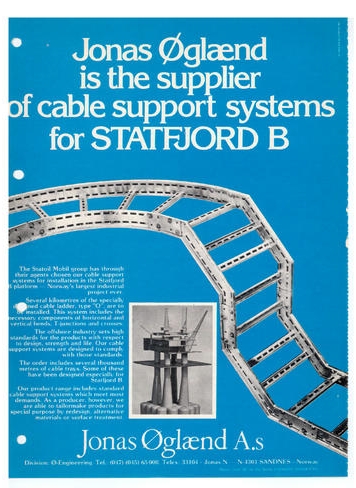
Ø-system delivers cable ducts to Statfjord B.
A new CAD system was introduced for grading and cutting in textile production.
The real estate division will be established with responsibility for 387,000 m2 of land, developed with
129,000 m2 of floor space.
1981
Ø-Engineering changes its name to Øglænd system, and is awarded the contract for cable ducts on Statfjord C.
1982
1982
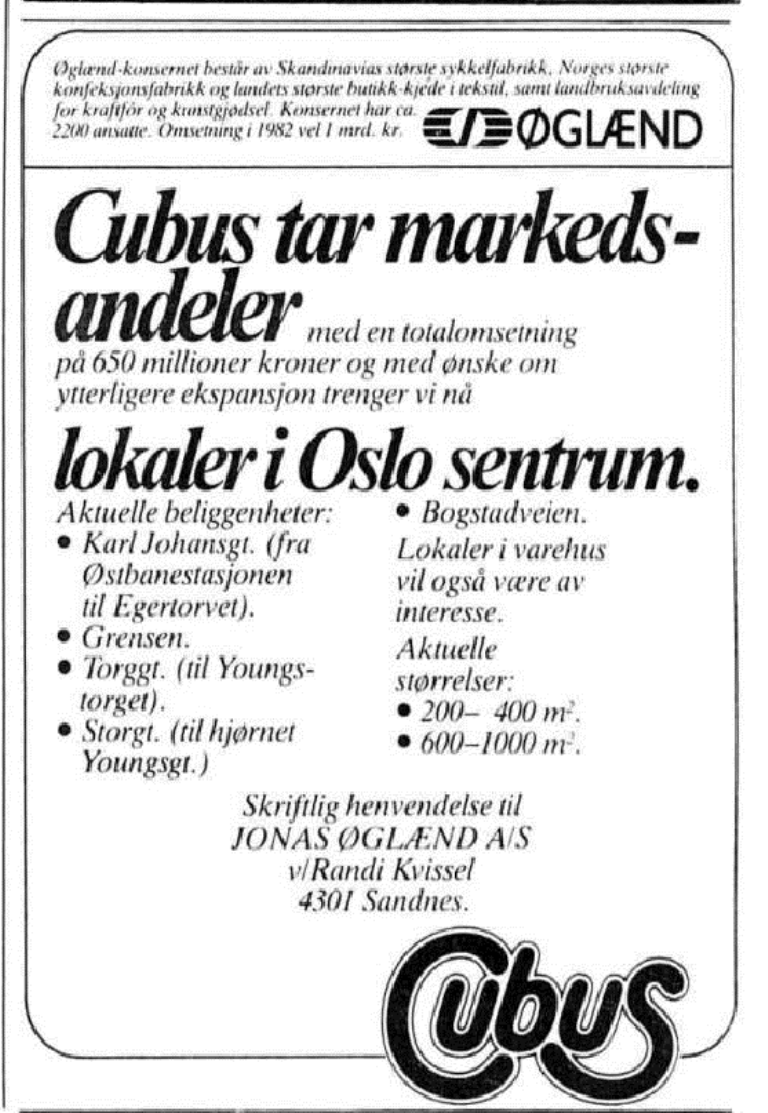
In Norway, there are 98 Cubus stores and 41 Ø-senter stores.
The Jonas Øglænd company museum opens.
1983
The Kvadrat shopping center opens.
1985
The agricultural department is sold to T. Skretting A/S.
The «Offroad» cycling wave starts.
1987
Ø-system becomes a limited company.
The number of employees in Jonas Øglænd AS is 1702.
1989
27% of the industrial jobs in Sandnes have been lost.
1989
Varner acquires the shares in Øglænd.
The production of motorcycles is discontinued.
Øglænd DBS sold to Swedish Monark.
Øglænd Pioner is sold to local owners.
1990
The population of Sandnes is 45,000.
1990
The Varner-Øglænd Group sells Øglænd System to local owners.
1991
Jonas Øglænd AS is merged into Dressmann.
The employees have holiday homes in six different locations in southern Norway, with a total of 192 beds - one of the building blocks of the Group's social safety net.
1999
For many years, Øglænd Pioner has produced clothes abroad, but developed and sewed the models in Sandnes. The company is now closing down here.
2000
Sandnes Cultural Center and Sandnes Library open.
2000
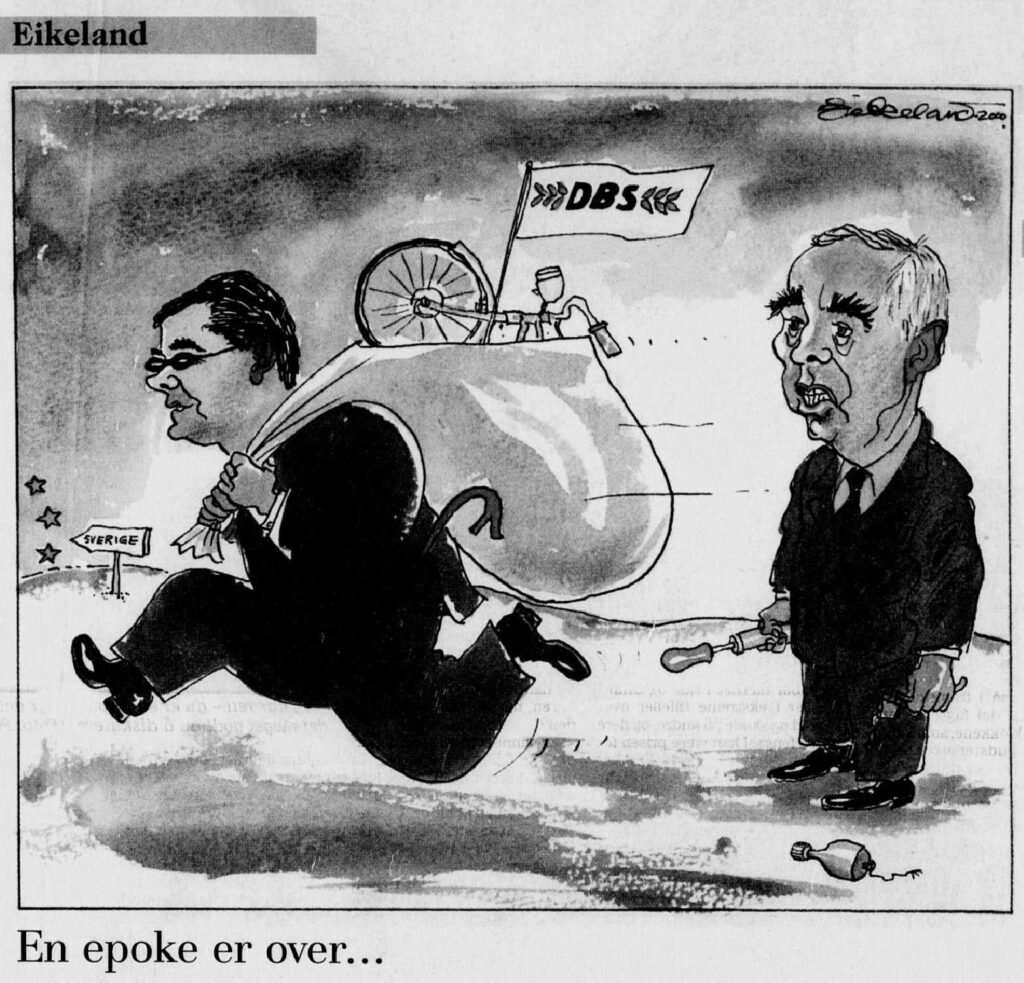
Bicycle production at Kvål is discontinued. DBS bikes are produced in other countries. Around 200 employees will lose their jobs.
2002
Together with Krossens Havremølle and Sandnesmuseet, the company museum will become part of Jærmuseet.
2008
VIenfabrikken opens.
2012
80 % of garments sold in Norwegian clothing stores in 2012 were produced in Asia.
2013
Kvadrat is the fourth largest shopping center in the country and accounts for a third of all retail trade in Norway.
2017
Hilti Group becomes new owners of Øglænd System AS.
2018
The population of Sandnes is 76,000.
2018
It is 150 years since the company Jonas Øglænd was established.